Bambu Lab X1 Carbon Combo vs Creality K1C
Head-to-head 3D printer comparison, 2026

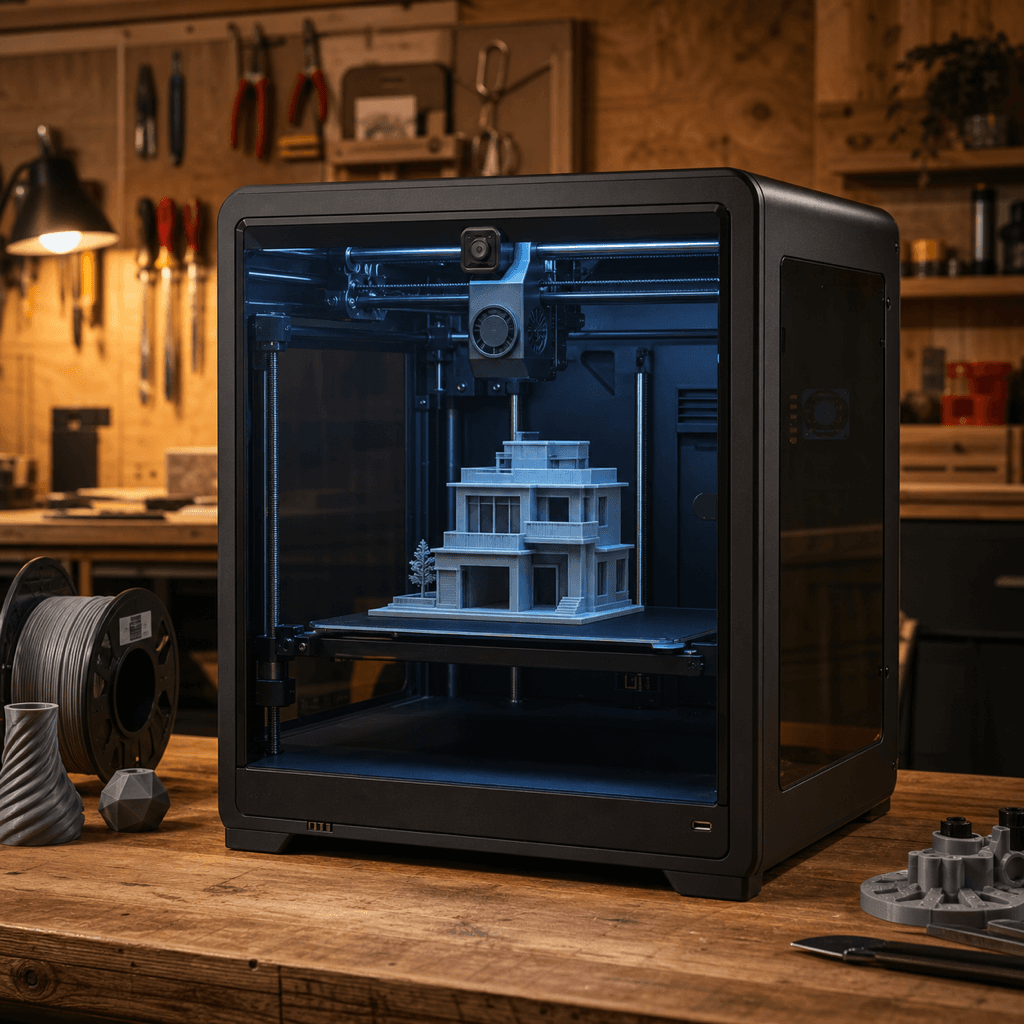
The Bambu Lab X1 Carbon Combo and Creality K1C are both FDM 3D printers competing in different tiers, $1199 vs $399. Both are scored across value, beginner-friendliness, quality, speed, and reliability. Here's the full breakdown.
Our Verdict
The Bambu Lab X1 Carbon Combo takes the crown with 8.8/10 vs 8.2/10. It pulls ahead in Print Quality, Reliability. That said, the Creality K1C saves you $800 and wins on Value.
Score Breakdown
Specifications
| Spec | Bambu Lab X1 Carbon Combo | Creality K1C |
|---|---|---|
| Price | $1199 | $399 |
| Type | FDM | FDM |
| Build Volume | 256 x 256 x 256 mm | 220 x 220 x 250 mm |
| Print Speed | 500 mm/s | 600 mm/s |
| Min Resolution | 0.05 mm | 0.05 mm |
| Weight | 15.8 kg | 13.5 kg |
| Overall Score | 8.8/10 | 8.2/10 |
Pros & Cons
Bambu Lab X1 Carbon Combo
+Lidar + auto-calibration eliminates first-layer anxiety on high-value prints
+AMS in the box: no separate multi-material module purchase needed
+HEPA filtration makes ABS/ASA printing genuinely office-safe
+Expandable to 16 colors by daisy-chaining up to 4 AMS units
+Bambu's reliability track record is the strongest in the consumer market
−$1,199 is a premium ask; the P1S Combo at $699 covers 90% of use cases for less
−Lidar calibration adds setup time on every new filament type
−AMS still purges filament on color transitions; purge blocks reduce waste but don't eliminate it
−Bambu ecosystem lock-in: proprietary slicing workflow works best with Bambu Studio
Creality K1C
+Carbon fiber and PA support at $399 — no other enclosed CoreXY comes close at this price
+600mm/s with input shaping produces genuinely usable parts, not just benchmark numbers
+All-metal hotend is a free upgrade vs the standard K1
+Active enclosure helps with ABS/ASA warping without a separate enclosure purchase
+Creality's largest installed base means community fixes land fast
−220×220×250mm build volume is tight for large prints
−Creality OS is Klipper-based but not stock Klipper — some community configs don't transfer cleanly
−No multi-color support without third-party add-ons
−Fan noise at full speed is audible
Who Should Buy Which?
Choose the Bambu Lab X1 Carbon Combo if you want:
- A great printer for engineering
- A great printer for multi-color
- A great printer for speed
- A great printer for professional
- A great printer for enclosed
- Enclosed CoreXY
- AMS multi-material (4 colors, expandable to 16 with 3 additional AMS units)
- Lidar sensor for first-layer and flow calibration
Choose the Creality K1C if you want:
- A great printer for speed
- A great printer for enclosed
- A great printer for engineering
- A great printer for value
- Enclosed CoreXY architecture
- Carbon-fiber-capable all-metal hotend (up to 300°C)
- 600mm/s max print speed
Frequently Asked Questions
Is the Bambu Lab X1 Carbon Combo better than the Creality K1C?
By the numbers, the Bambu Lab X1 Carbon Combo scores higher (8.8/10). But "better" depends on your use case, the Creality K1C may be the smarter buy if you need speed.
Which is better for beginners, Bambu Lab X1 Carbon Combo or Creality K1C?
Both score 7/10 for beginners. Go with the Creality K1C to save $800.
Is the Bambu Lab X1 Carbon Combo worth $800 more than the Creality K1C?
The Bambu Lab X1 Carbon Combo scores higher overall (8.8/10 vs 8.2/10). The extra $800 gets you lidar + auto-calibration eliminates first-layer anxiety on high-value prints.
What's the main difference between Bambu Lab X1 Carbon Combo and Creality K1C?
Build volume (256x256x256mm vs 220x220x250mm) and print speed (500 vs 600 mm/s). The Bambu Lab X1 Carbon Combo is best for engineering; the Creality K1C targets speed.