Creality K1C vs Elegoo Jupiter SE
Head-to-head 3D printer comparison, 2026
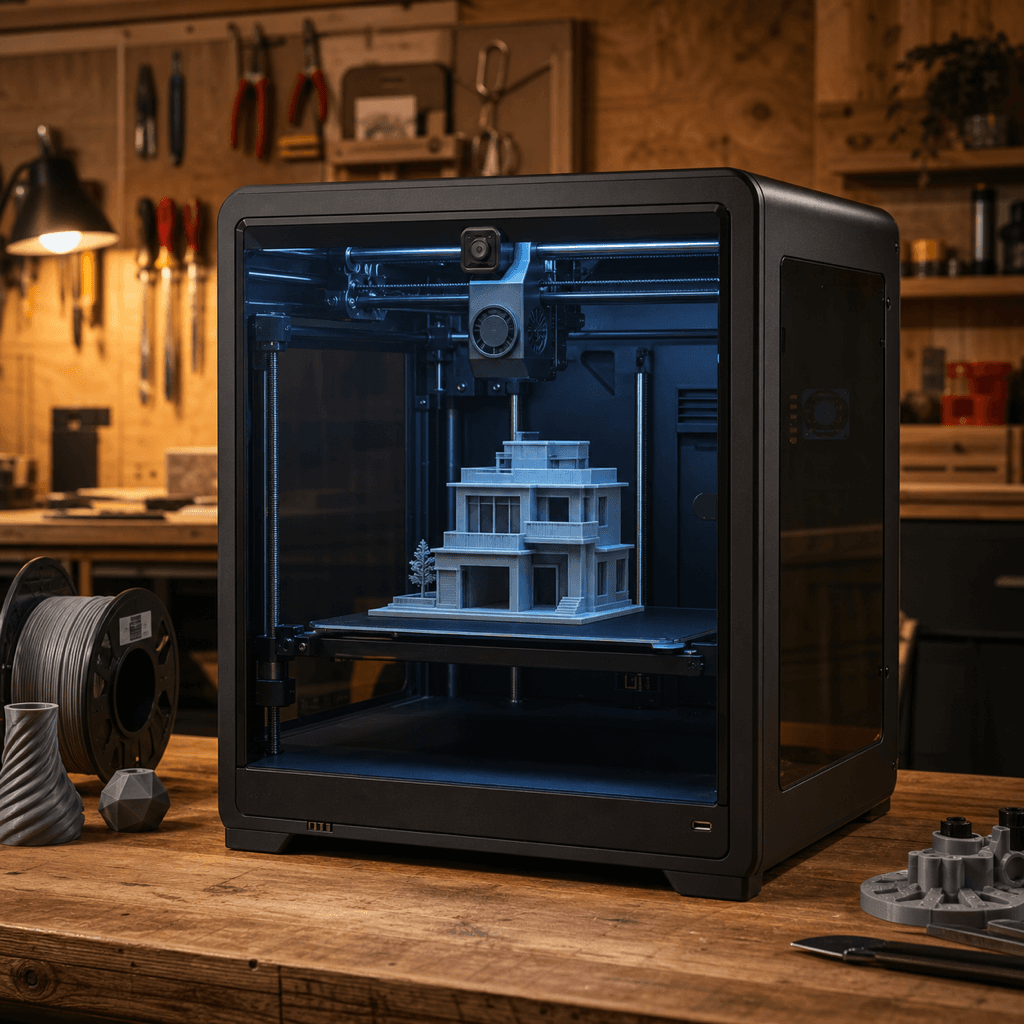

Comparing FDM to resin? The Creality K1C ($399, FDM) and Elegoo Jupiter SE ($340, RESIN) use fundamentally different technologies. FDM melts filament layer by layer; resin cures liquid with UV light. Here's how they stack up.
Our Verdict
The Creality K1C takes the crown with 8.2/10 vs 7.8/10. It pulls ahead in Value, Beginner Friendliness, Speed. That said, the Elegoo Jupiter SE saves you $59 and wins on Print Quality.
Score Breakdown
Specifications
| Spec | Creality K1C | Elegoo Jupiter SE |
|---|---|---|
| Price | $399 | $340 |
| Type | FDM | RESIN |
| Build Volume | 220 x 220 x 250 mm | 277 x 156 x 300 mm |
| Print Speed | 600 mm/s | 70 mm/s |
| Min Resolution | 0.05 mm | 0.01 mm |
| Weight | 13.5 kg | 18 kg |
| Overall Score | 8.2/10 | 7.8/10 |
Pros & Cons
Creality K1C
+Carbon fiber and PA support at $399 — no other enclosed CoreXY comes close at this price
+600mm/s with input shaping produces genuinely usable parts, not just benchmark numbers
+All-metal hotend is a free upgrade vs the standard K1
+Active enclosure helps with ABS/ASA warping without a separate enclosure purchase
+Creality's largest installed base means community fixes land fast
−220×220×250mm build volume is tight for large prints
−Creality OS is Klipper-based but not stock Klipper — some community configs don't transfer cleanly
−No multi-color support without third-party add-ons
−Fan noise at full speed is audible
Elegoo Jupiter SE
+277mm wide platform prints full-size miniature armies or large costume props in one run
+12.8-inch 6K mono screen gives better per-pixel resolution than smaller 8.9-inch screens
+COB light source delivers more even illumination across the full platform vs edge-to-edge LED arrays
+Tilt release reduces print-failure rate on large cross-sections
−18kg machine: this is a semi-permanent desk fixture, not something you move around
−Large FEP sheets cost more to replace and are harder to swap than smaller printer FEPs
−Resin handling requires PPE and ventilation regardless of size; a large vat means more resin exposure risk
−Steep beginner learning curve: hollow supports and drainage holes are mandatory at this scale
Who Should Buy Which?
Choose the Creality K1C if you want:
- A great printer for speed
- A great printer for enclosed
- A great printer for engineering
- A great printer for value
- Enclosed CoreXY architecture
- Carbon-fiber-capable all-metal hotend (up to 300°C)
- 600mm/s max print speed
Choose the Elegoo Jupiter SE if you want:
- A great printer for large-prints
- A great printer for resin
- A great printer for miniatures
- A great printer for professional
- 12.8-inch 6K mono LCD screen
- 277x156x300mm build volume
- COB mono light source (60,000-hour lifespan)
Frequently Asked Questions
Is the Creality K1C better than the Elegoo Jupiter SE?
By the numbers, the Creality K1C scores higher (8.2/10). But "better" depends on your use case, the Elegoo Jupiter SE may be the smarter buy if you need large-prints.
Which is better for beginners, Creality K1C or Elegoo Jupiter SE?
The Creality K1C is more beginner-friendly (7/10 vs 6/10) with easier setup and a gentler learning curve.
Is the Creality K1C worth $59 more than the Elegoo Jupiter SE?
The Creality K1C scores higher overall (8.2/10 vs 7.8/10). The extra $59 gets you carbon fiber and pa support at $399 — no other enclosed corexy comes close at this price.
What's the main difference between Creality K1C and Elegoo Jupiter SE?
Technology: the Creality K1C is FDM (filament) and the Elegoo Jupiter SE is RESIN (resin). FDM prints bigger functional parts; resin delivers finer surface detail.