15 Profitable 3D Printing Business Ideas for 2026
Start making money with your 3D printer. Realistic business ideas with actual profit margins.
Top pick in this guide
Elegoo Mars 5 Ultra
$284, PrintPick score 8.2/10. Check the live price before it moves.
Elegoo Mars 5 Ultra
High-Margin: Custom Miniatures and Resin Printing, Score: 8.2/10, $284
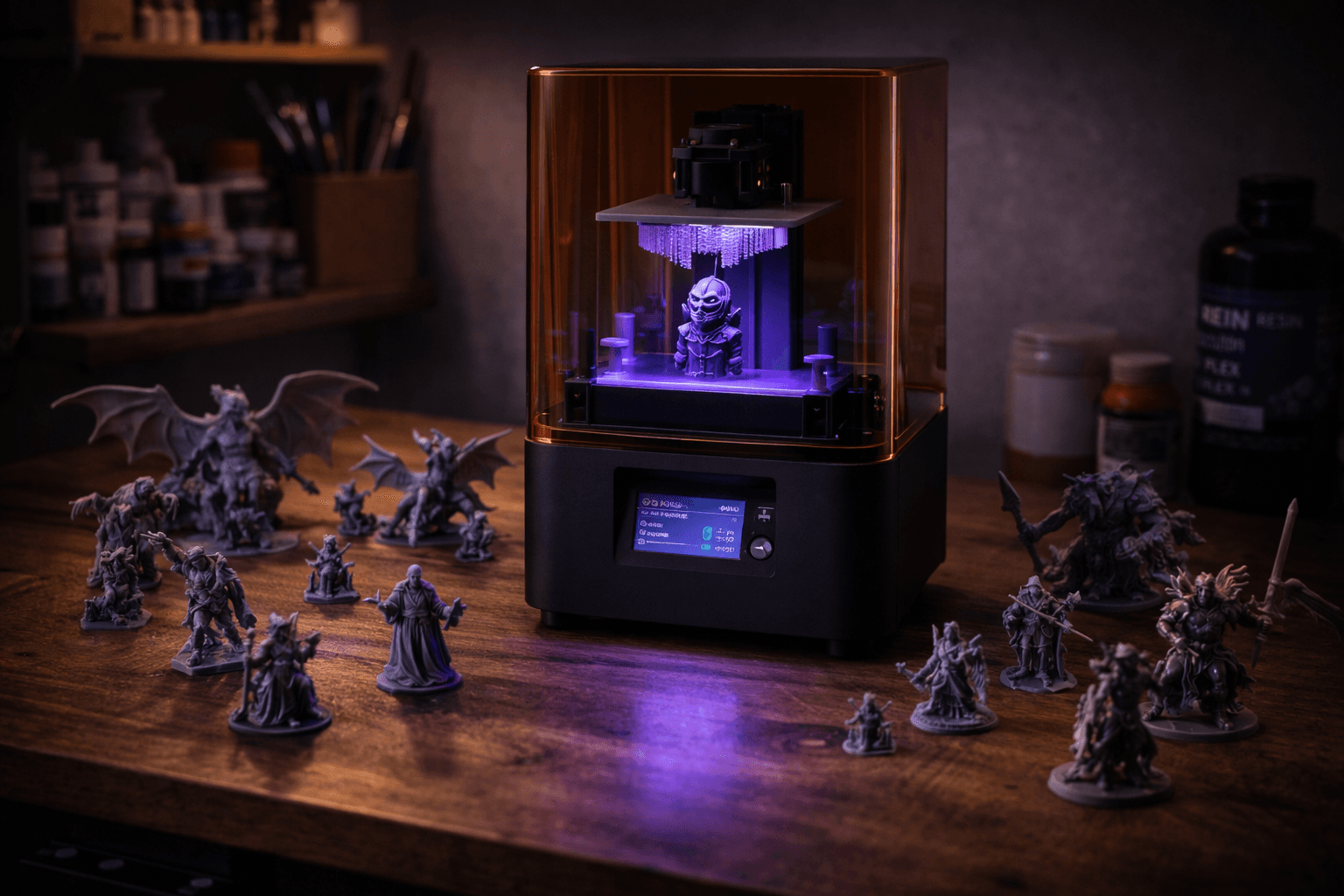
Custom tabletop miniatures represent the most compelling 3D printing business economics available. The math: a standard 28mm D&D character miniature uses 4-6ml of resin at a cost of $0.12-0.30 per miniature in material. These sell for $12-25 for standard characters, $25-50 for custom sculpts of a player's specific character description, and $50-200 for display-quality 75mm+ figures with custom basing. At $15 per miniature with $0.25 in material cost, gross margin is 98.3%. Even accounting for design time (or licensing fees for purchased STL files), print failures (typically under 5% on a well-tuned Mars 5 Ultra), packaging ($0.30-0.50), and Etsy's 12-15% transaction and listing fees, net margins of 60-80% are achievable. The Elegoo Mars 5 Ultra at $284 pays for itself in 20-25 miniature sales. Month one revenue target for a part-time operation: $500-1,000 from 30-60 miniature orders. The required skills beyond printing: photography (miniatures need good macro photos to sell, a $30 lightbox and basic editing), Etsy SEO (listing titles and tags determine whether anyone finds your shop), and either sculpting skills or the budget to license quality STL files ($10-50 per design from professional sculptors on Patreon or MyMiniFactory). The ceiling: top miniature Etsy sellers report $3,000-8,000 per month from multiple printers running continuously. The floor: zero sales if the photography is poor or the listings are not optimized. The business requires marketing effort, not just printing.
Bambu Lab P1S
High-Volume: Etsy Print Farm, Score: 9/10, $449
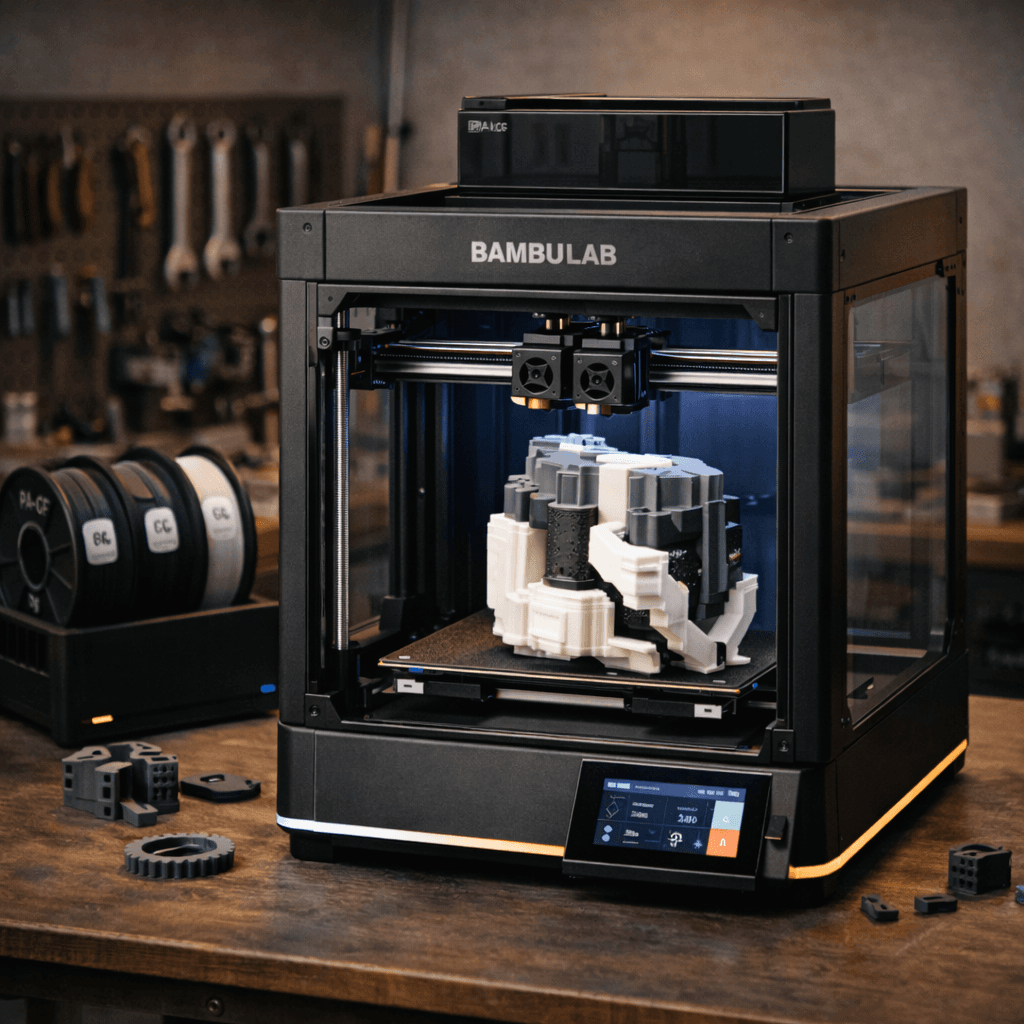
A print farm is a business model that trades margin for volume: run multiple printers continuously producing popular items, and profit from throughput rather than per-unit margin. The P1S is the print farm operator's default choice because it combines reliability (fewer failed prints means less wasted material and time) with speed (500mm/s means more output per machine hour) and remote monitoring (run printers unattended while monitoring from a phone). The economics at scale: five P1S printers running 18 hours per day produce approximately 100-150 medium-sized items per week. Popular Etsy categories for FDM print farms include articulated creatures (dragons, axolotls, fish, $15-35 each), fidget toys (cubes, chains, spinners, $8-18), desk organizers and phone stands ($10-20), and gaming accessories (dice trays, card holders, $15-40). A five-printer farm operating 18 hours per day producing 130 items per week at an average sale price of $18 generates $2,340 in weekly revenue. Material cost at $2-4 per item = $260-520. Etsy fees at 12% = $280. Net revenue before time cost: $1,500-1,800/week, or $6,000-7,200/month. The time investment is substantial: packing and shipping 130 orders per week takes 10-15 hours. Customer service, photography, listing management, and slicer maintenance add another 5-10 hours. This is a real part-time job, not passive income. Startup cost: five Bambu P1S printers at $599 each = $3,000 plus shipping supplies ($200) and initial filament stock ($300). Total startup: $3,500. Break-even at $6,000/month net revenue: approximately 2 months. The realistic path: start with one or two printers, identify which specific products sell consistently in your market, then scale. The biggest failure mode is buying five printers before validating that your specific listings generate consistent orders.
Bambu Lab H2D
Premium: Functional Prototyping Services, Score: 8.2/10, $1899
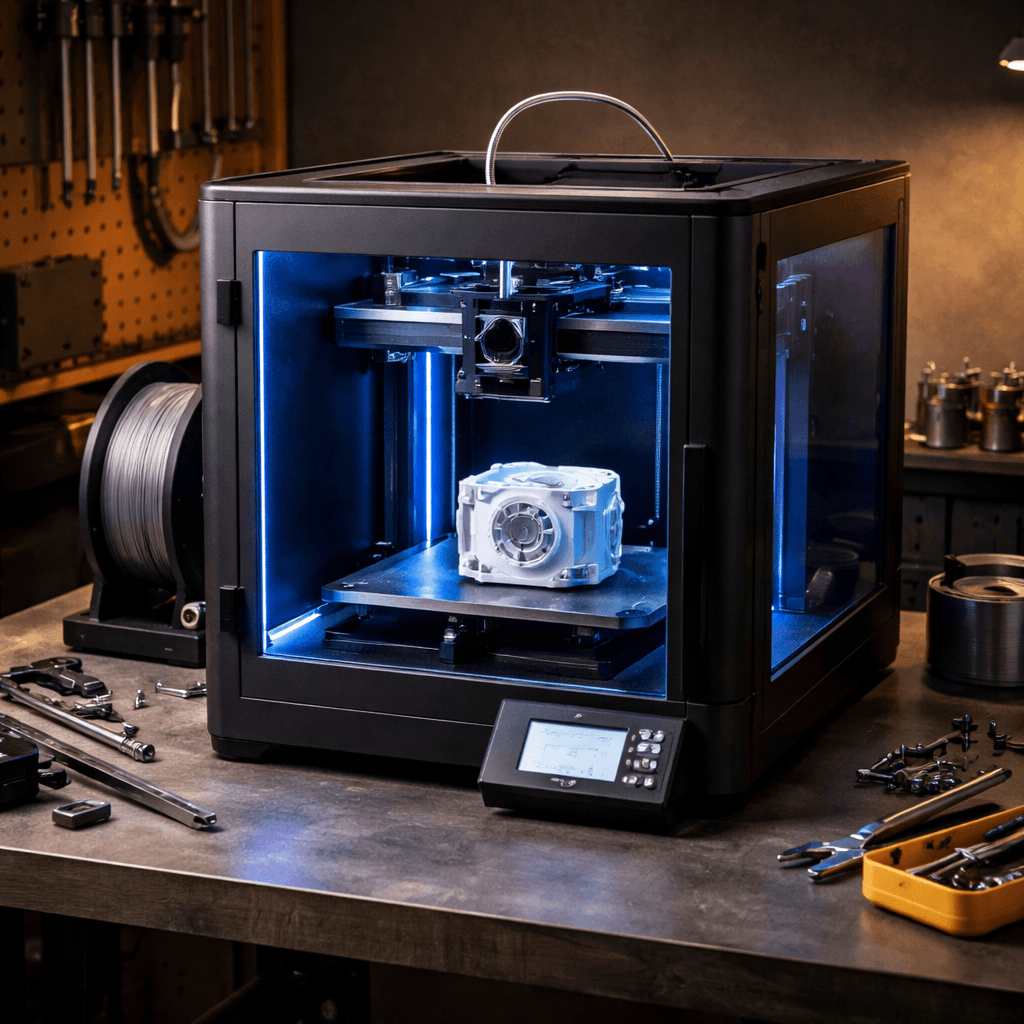
Functional prototyping is a B2B service with higher ticket prices, longer sales cycles, but lower competition than consumer Etsy selling. The market: small businesses, inventors, product designers, engineers, and startups who need physical prototypes of components, housings, jigs, and custom tools faster than they can get from a traditional machining shop (which takes days to weeks) and without the minimums that injection molding requires (typically 1,000+ units). The value proposition: a 3D printed prototype in the customer's hands in 24-48 hours, at a price point of $50-300 per part depending on size, material, and complexity. The Bambu Lab H2D is the right machine for this service because its 65C heated chamber, dual hardened nozzles, and AI monitoring handle engineering materials reliably: ABS for heat resistance, carbon fiber-filled PLA for stiffness-to-weight, PETG for chemical resistance, and Nylon for impact resistance and flexibility. The dual nozzle system cuts complex print times nearly in half compared to single-nozzle machines. Clients for a prototyping service include: electronics startups needing enclosures for PCBs, small manufacturers needing jigs and fixtures for assembly lines, product designers needing multiple iterations of a consumer product concept before going to market, and medical device adjacent companies needing non-clinical prototype housings. Finding clients: LinkedIn outreach to product designers and mechanical engineers in your area, partnerships with local maker spaces and engineering schools, and Thumbtack or Bark for local service discovery. Pricing model: charge by material weight at a markup (typically 10-20x raw material cost), plus an hourly design and support fee of $50-100/hour. A $50 part might use $3 in materials, take 4 hours to print and 1 hour to post-process, and represent $200-250 in billable time. Revenue per order is higher than consumer print farming, but order frequency is lower until you build a client base. This is a real professional service business that requires customer relationship skills, not just printing skill.
The Bottom Line
Start with whichever model matches your existing skills and tolerance for time investment. Custom miniatures on Etsy has the lowest startup cost ($284 for the Mars 5 Ultra plus $100 for a wash-cure station) and the clearest path to first sales within 30 days. Print farming requires more capital ($3,000+) but scales more linearly. Functional prototyping has the highest per-order revenue but the longest sales cycle. The principle that holds across all three: price for margin, not for volume. Use our Cost Estimator at /tools/cost-estimator to calculate accurate per-print costs before setting prices, underpricing is the most common mistake in 3D printing businesses.
Related Articles
How Much Does 3D Printing Actually Cost in 2026?
Real numbers: printer cost, filament, electricity, maintenance, and failed prints. Total cost of ownership breakdown.
Best 3D Printers for Small Business in 2026
Starting a 3D printing business? Reliability and uptime matter more than peak specs. These are the printers production environments actually run.
FDM vs Resin 3D Printers: The Complete Guide for 2026
FDM or resin? The definitive comparison covering cost, quality, speed, safety, and best use cases.