FDM vs Resin 3D Printers: The Complete Guide for 2026
FDM or resin? The definitive comparison covering cost, quality, speed, safety, and best use cases.
Top pick in this guide
Bambu Lab A1 Combo
$399, PrintPick score 9.2/10. Check the live price before it moves.
Bambu Lab A1 Combo
FDM: The Versatile Workhorse, Score: 9.2/10, $399
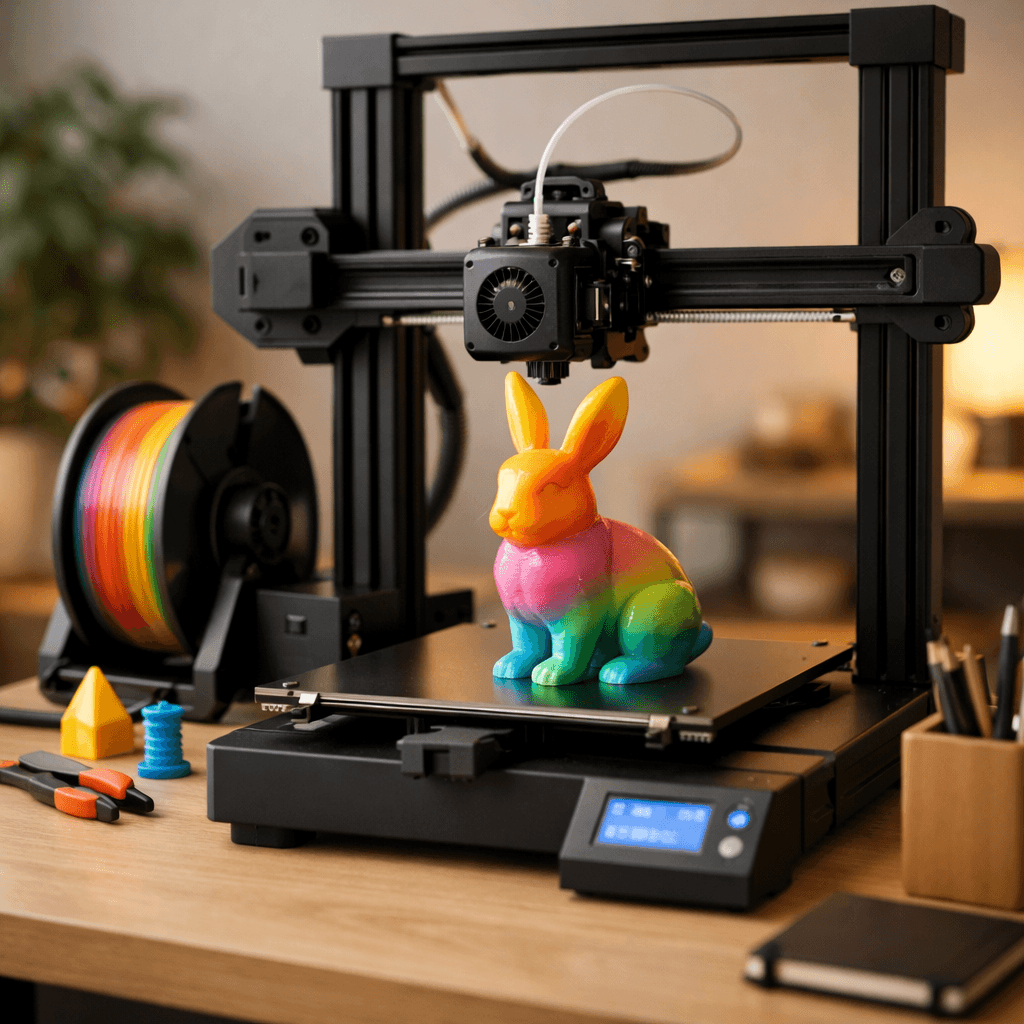
FDM melts plastic filament and builds objects layer by layer. Slice your model, send it to the printer, wait, pull the print off the plate. No chemicals, no post-processing for most jobs. Layer lines are visible at 0.1-0.3mm, which bothers some people and not others. Functional prints don't usually need to look perfect. Build volumes are large: the A1 Combo has a 256mm cube, the K1 Max does 300mm. You can print helmets, armor, and big assemblies as single pieces. Material costs $15-25 per kilogram spool, and most prints use 20-200 grams. That's $0.30-5.00 per typical print. The trade-off vs resin is surface quality: FDM layer lines are visible, especially on curved surfaces under direct light. For functional stuff, it doesn't matter. For anything display-quality, you're either sanding or considering resin instead. About 80% of consumer 3D printing is FDM.
Elegoo Mars 5 Ultra
Resin: The Detail Machine, Score: 8.2/10, $284
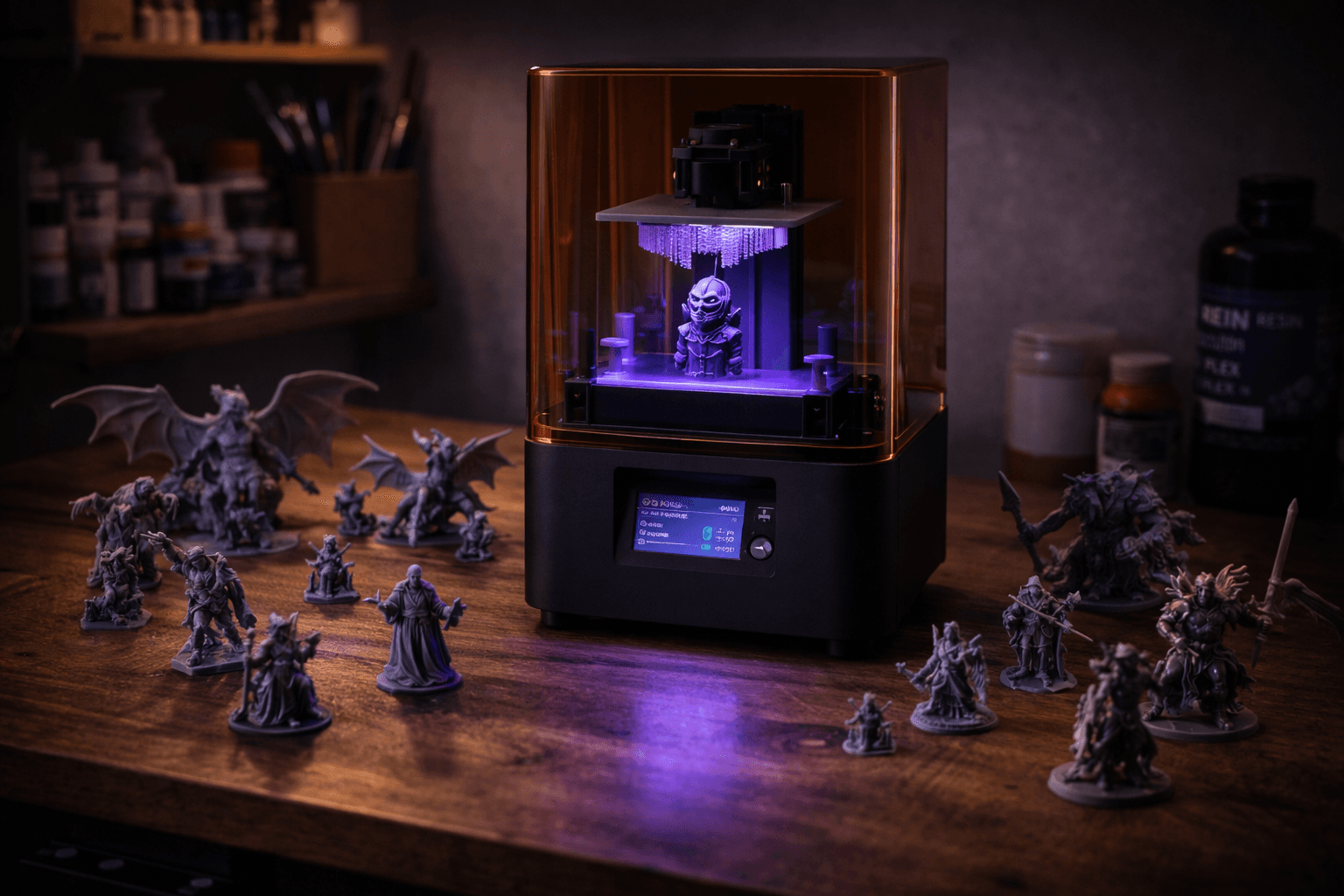
Resin cures liquid photopolymer with a UV LCD screen. Layer heights of 0.01-0.05mm are standard, roughly 10x finer than FDM. Nearly invisible layer lines. Surface quality that looks injection-molded. For miniatures, jewelry, and anything where detail matters at close range, resin is in a different category. The Mars 5 Ultra at $284 is the entry point I'd recommend. But resin has real trade-offs. After printing, you drain excess resin, wash the part in IPA or water for 5-10 minutes, cure under UV for another 5-10 minutes, then remove supports. You need a wash-and-cure station ($90-150), nitrile gloves every time, good ventilation, and a plan for disposing of waste resin. Uncured resin is a skin irritant and smells. Build volumes are small on most consumer machines: 120-200mm. You're not printing helmets on a resin printer. Resin costs $30-50 per liter, but per-miniature cost is $0.15-0.50 because figures use so little material. About 20% of consumer 3D printing is resin, mostly concentrated in the miniatures and jewelry communities.
The Bottom Line
Choose FDM if you want versatility, larger prints, stronger parts, simpler workflow, and lower running costs. FDM is the right first printer for 90% of people. Choose Resin if you specifically need fine detail, miniatures, jewelry, dental models, and you're comfortable with the chemical handling and post-processing workflow. Many serious makers eventually own one of each: an FDM printer for functional and large prints, and a resin printer for detail work. A solid combo: Bambu Lab A1 Mini ($199) for FDM + Elegoo Mars 5 Ultra ($284) for resin = both technologies for under $500. Use our FDM vs Resin quiz at /tools/fdm-vs-resin for a personalized recommendation based on your specific use case.
Our Pick
If you land on FDM, start with Polymaker PolyLite PLA. It prints cleanly on every major printer, arrives vacuum-sealed with desiccant, and costs less than most failed-print-prone budget filaments. Polymaker's Summer Restock is live: use our code for 35% off storewide through July 5.
Code: SHADMANRAHMAN(Summer Restock: 35% off storewide, ends July 5)
Related Articles
30 Best Things to 3D Print as a Beginner (Actually Useful)
Skip the benchies, these are genuinely useful prints that teach you 3D printing skills along the way.
Best Things to 3D Print and Sell (Actually Profitable in 2026)
What sells, what doesn't, and realistic profit margins for each category of 3D printed products.
How to Fix Stringing on Your 3D Printer: The Complete Guide
Stringing ruining your prints? Learn exactly how to fix it with retraction settings, temperature tuning, and more.