Bambu Lab A1 Combo vs Anycubic Kobra 3 Combo: Which Multi-Color Printer Wins?
Two multi-color printers at the same price. We compare scores, speed, print quality, and ecosystem.
Top pick in this guide
Bambu Lab A1 Combo
$399, PrintPick score 9.2/10. Check the live price before it moves.
Bambu Lab A1 Combo
Bambu Lab A1 Combo ($399), Score: 9.2/10, $399
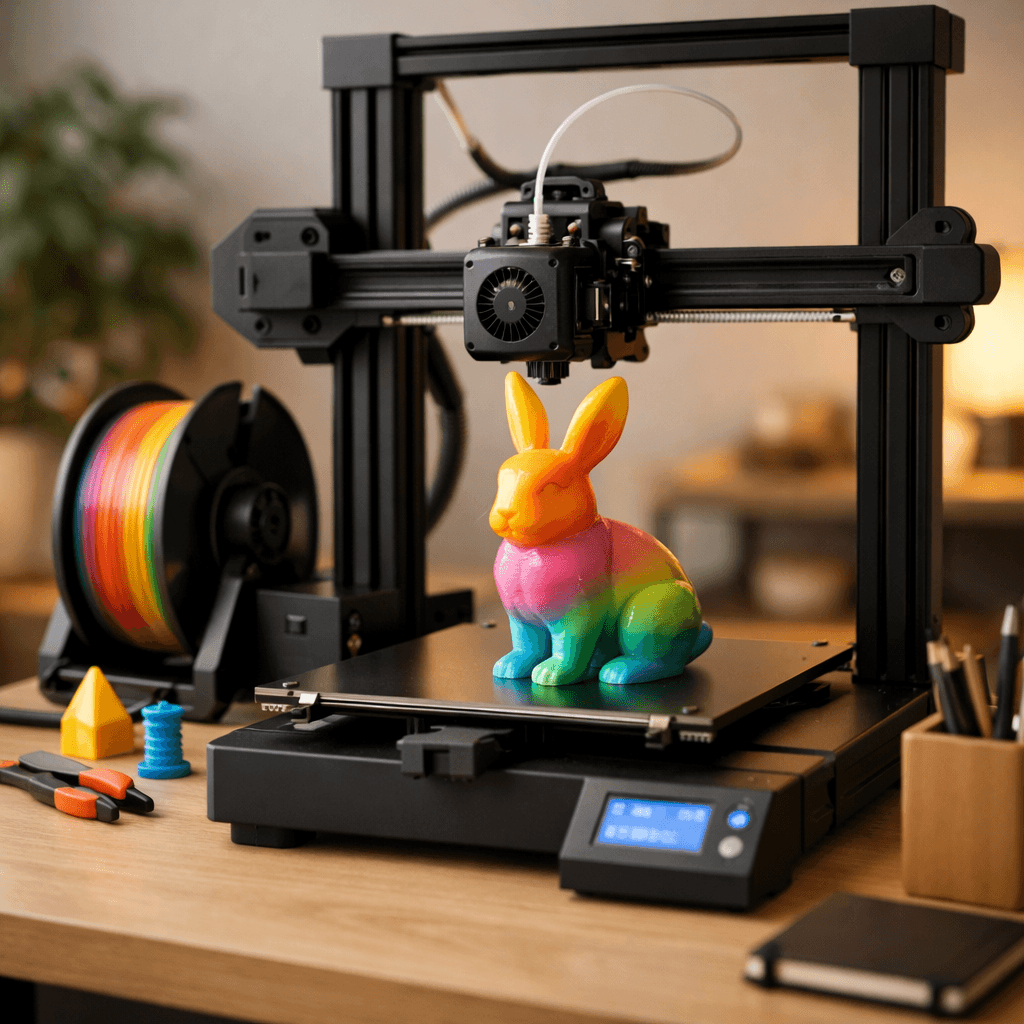
The A1 Combo has two years of community use behind it, and that matters more than the spec sheet. The AMS Lite's filament-change reliability has improved significantly through firmware updates. Early units had documented failure modes. Current firmware is much better. The color mapping in Bambu Studio is genuinely easy: load your model, paint colors onto the surface with a brush tool, and the slicer figures out all the filament change logic. No model editing, no G-code knowledge required. I'd compare it to painting in Photoshop rather than editing code. The community is large. Hundreds of thousands of users on Reddit and Discord means almost every problem you hit has a documented fix. The tradeoffs are real: cloud dependency for WiFi printing, RFID spools that gently push you toward Bambu filament, and a young company with an unproven long-term support track record. For most buyers these are acceptable. The software advantage is something you feel every time you use it.
Anycubic Kobra 3 Combo
Anycubic Kobra 3 Combo ($399), Score: 8/10, $399
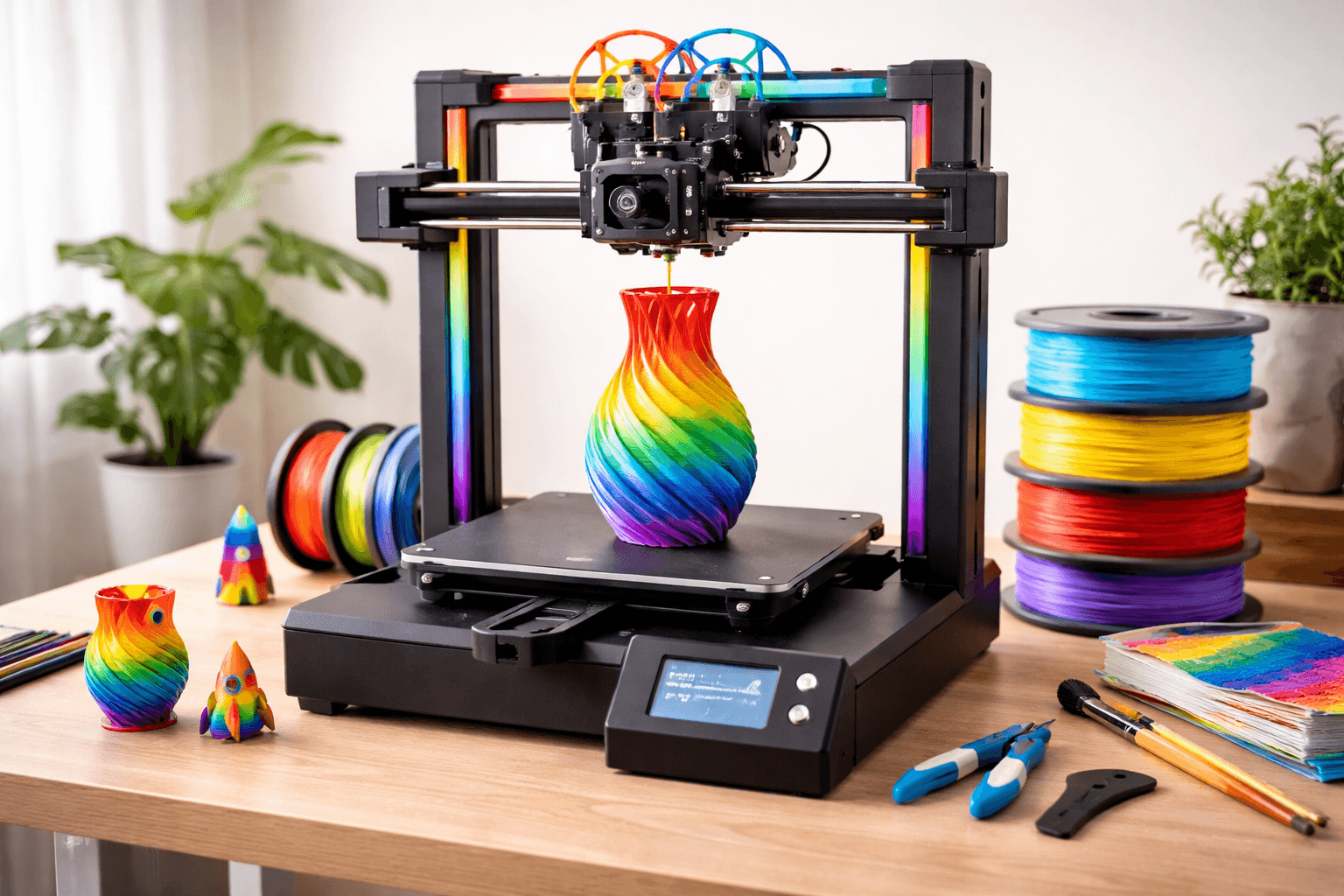
The Kobra 3 Combo is a legitimate competitor, not a cheap knockoff. The ACE Pro system handles four spools with automatic switching, same principle as the AMS Lite. Print speed is rated at 600mm/s vs the A1's 500mm/s, but multi-color jobs pause for filament changes on both machines and the real-world difference is minimal. Build volume at 250x250x250mm is basically the same as the A1's 256mm cube. Print quality is genuinely good on properly dialed-in profiles. Where it falls short: the ACE Pro has more variability in filament-change reliability, especially with non-standard filament diameters. Anycubic's firmware updates are slower than Bambu's. The community is smaller, which means your specific problem may not have a documented fix yet. Support response times are longer. These aren't dealbreakers, but they're real. The Kobra 3 Combo makes sense if you specifically don't want Bambu's ecosystem, or if it drops below $350 on sale.
The Bottom Line
The A1 Combo wins: better software, more reliable AMS Lite, larger community, smoother overall experience. The Kobra 3 Combo produces good prints, but it trails in software maturity and ecosystem depth. Buy the Kobra 3 if you're specifically avoiding Bambu or catch it under $350 on sale. Otherwise, the A1 Combo is the correct choice at this price point.
Related Articles
Which Bambu Lab A1 Should You Buy?
Bambu Lab A1 Combo vs A1 Mini: same DNA, very different capabilities. We break down who should buy which.
Elegoo Centauri Carbon Review 2026: Enclosed CoreXY for $299
An enclosed CoreXY 3D printer for $299 shouldn't exist. The Elegoo Centauri Carbon does exist, and it's genuinely good. Here's what you get, what you give up, and how it stacks up against the Bambu A1 Combo.
Best 3D Printers Under $500 in 2026
Under $500 now gets you multi-color, CoreXY motion, enclosed designs, and features that cost $1,000+ just two years ago.