Best 3D Printers Under $500 in 2026
Under $500 now gets you multi-color, CoreXY motion, enclosed designs, and features that cost $1,000+ just two years ago.
Top pick in this guide
Bambu Lab A1 Combo
$399, PrintPick score 9.2/10. Check the live price before it moves.
Bambu Lab A1 Combo
Best Overall Under $500, Score: 9.2/10, $399
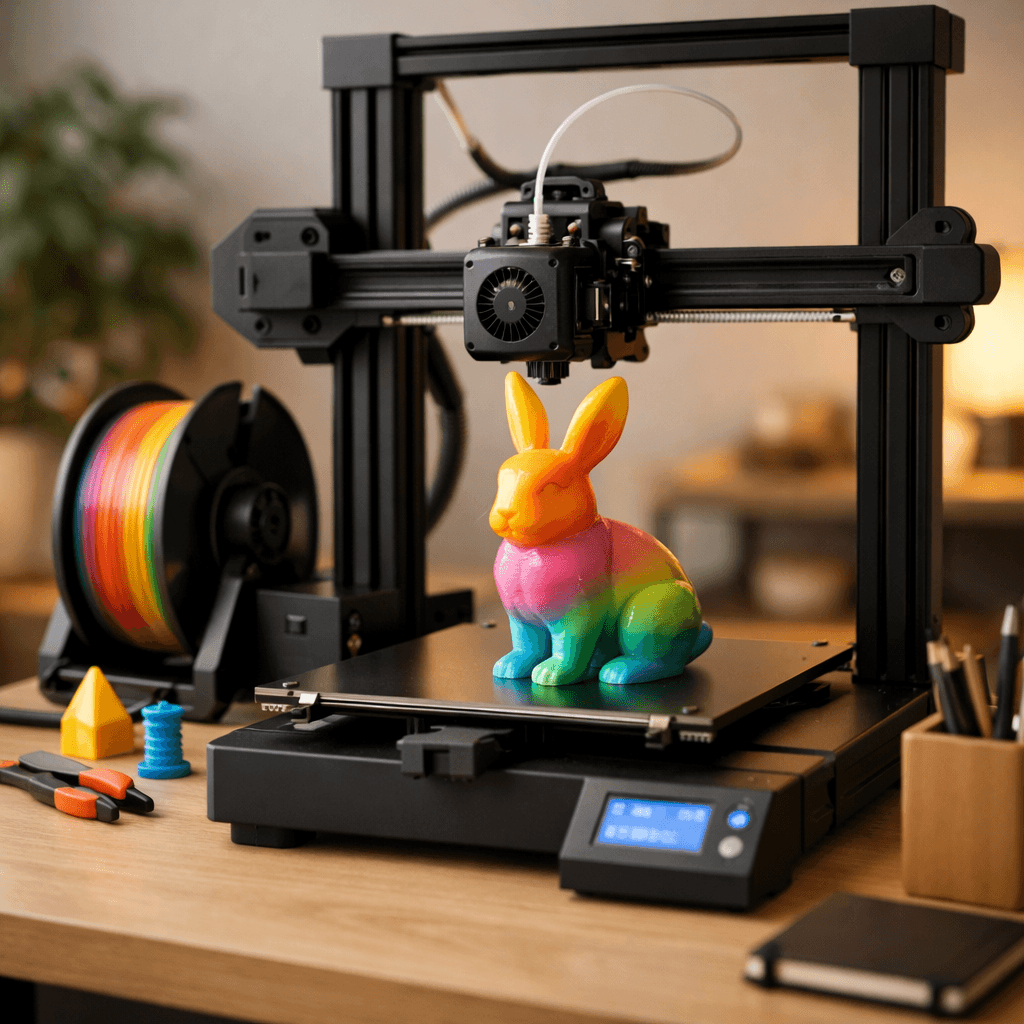
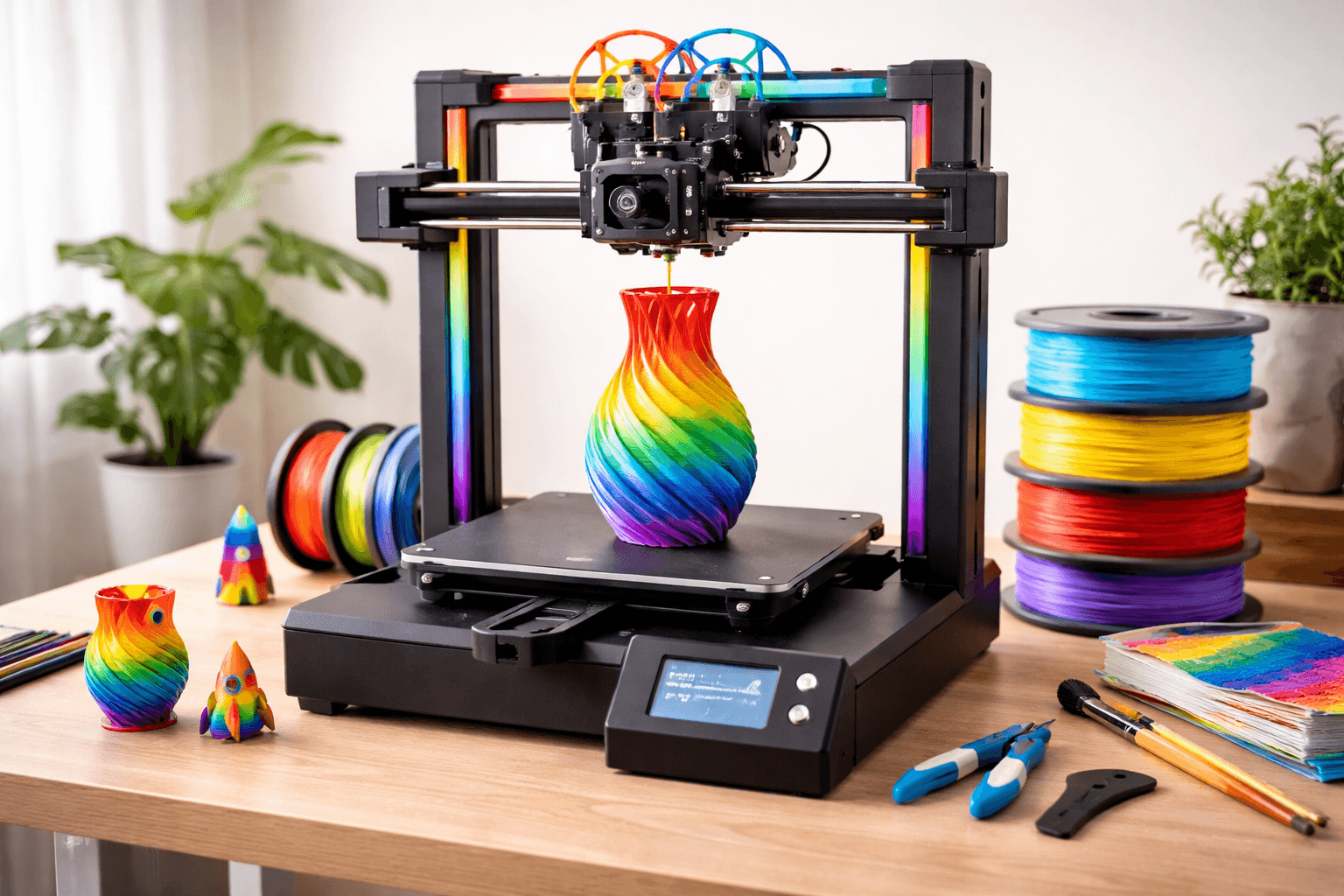
The A1 Combo at $399 is the printer that forced the industry to catch up. Before it launched, multi-color printing required a $1,000+ machine or a finicky DIY unit. The A1 Combo delivers four-color printing out of the box for under $400. The AMS Lite automatically switches filaments during a print and purges color transitions into a small waste tower. Bambu Studio's color painting tool is the best in the category. You paint colors directly onto your 3D model in the slicer, like a paint bucket tool in Photoshop, and the software handles all the filament-change logic. Print speed reaches 500mm/s with the H-bot motion system. Practical working speed for quality multi-color prints is 300-400mm/s. 256x256x256mm build volume. WiFi, built-in camera, and Bambu's cloud infrastructure all work reliably. Tradeoffs worth knowing: open frame means no heated chamber, which limits ABS and Nylon reliability compared to enclosed printers. Bambu's ecosystem leans proprietary. Their filament has RFID tags that auto-configure profiles, but third-party filament works with manual settings. For most users printing PLA, PETG, and multi-color decorative models, neither tradeoff matters. This is what I'd recommend to anyone who asks what to buy in this price range.
QIDI X-Plus 3
Best Enclosed for Engineering Materials, Score: 8.4/10, $499
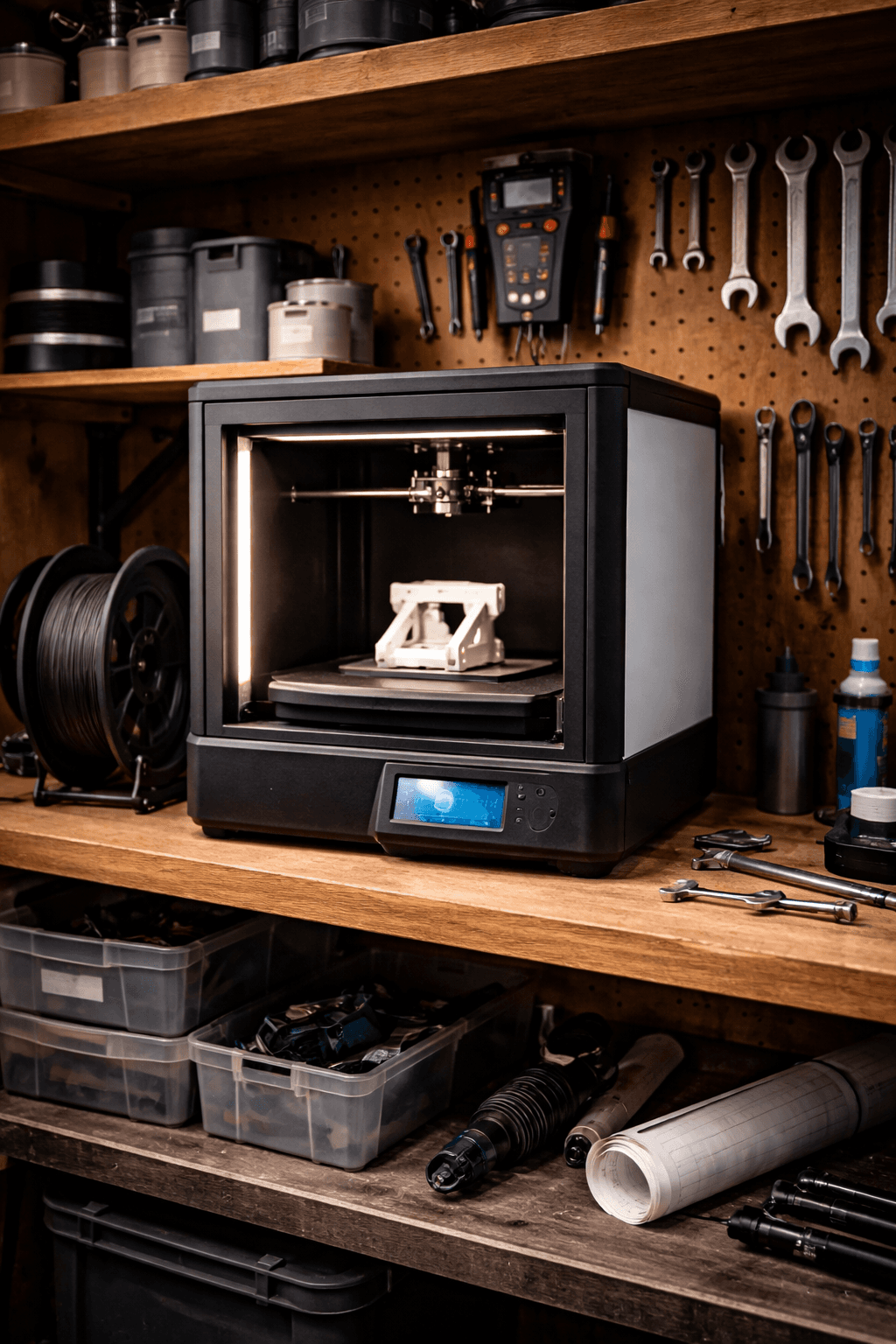
The QIDI X-Plus 3 is the hidden gem of the sub-$500 enclosed printer market. At $499, it offers active chamber heating up to 60 degrees Celsius. No other enclosed printer at this price includes that. It matters enormously for materials. Active chamber heating is what separates genuine Nylon and Polycarbonate printing from theoretical Nylon and Polycarbonate printing. Passive enclosures like the Bambu P1S rely on hotend warmth, reaching maybe 40-45 degrees in practice. The X-Plus 3 actively heats to a configurable target and holds it throughout the print. This eliminates the thermal gradients that cause warping, delamination, and layer adhesion failures with high-temperature materials. 280x280x270mm build volume. 350mm/s maximum speed isn't the fastest here, but it's adequate for engineering applications where dimensional accuracy matters more than raw throughput. The honest weakness is software. QIDI's slicer is functional but noticeably less polished than Bambu Studio. Expect more time in settings. WiFi works but is less reliable than Bambu's. For PLA and PETG, the A1 Combo is the better choice. For anyone who needs Nylon, PC, PA-CF, or other engineering filaments, the X-Plus 3's active chamber heating at $499 is extraordinary value.
Anycubic Kobra 3 Combo
Best Alternative to Bambu Ecosystem, Score: 8/10, $399
The Kobra 3 Combo answers one specific question: what do you buy if you want multi-color printing at $399 but don't want to be in Bambu's ecosystem? Anycubic's ACE Pro handles four filament colors with automatic switching. 600mm/s maximum speed nominally edges out the A1 Combo on paper. Real-world print quality at those speeds is comparable rather than noticeably better. The ACE Pro has improved since launch. Early units had more filament-change failures, but firmware updates addressed most reliability issues. Anycubic's slicer now includes a paint-on color tool similar to Bambu Studio's. The 250x250x250mm build volume is slightly smaller than the A1 Combo's 256mm. Doesn't matter in practice. The reasons to choose the Kobra 3 Combo over the A1 Combo are partly ideological: less Bambu ecosystem lock-in, different community dynamics. The reasons to choose the A1 Combo are practical: larger community, more mature software, more real-world hours on the color system. For most buyers, the A1 Combo is the safer call. The Kobra 3 Combo is right if you specifically want to avoid Bambu or if it goes on sale below $350.
Flashforge Adventurer 5M Pro
Best for Families and Schools, Score: 8.6/10, $379
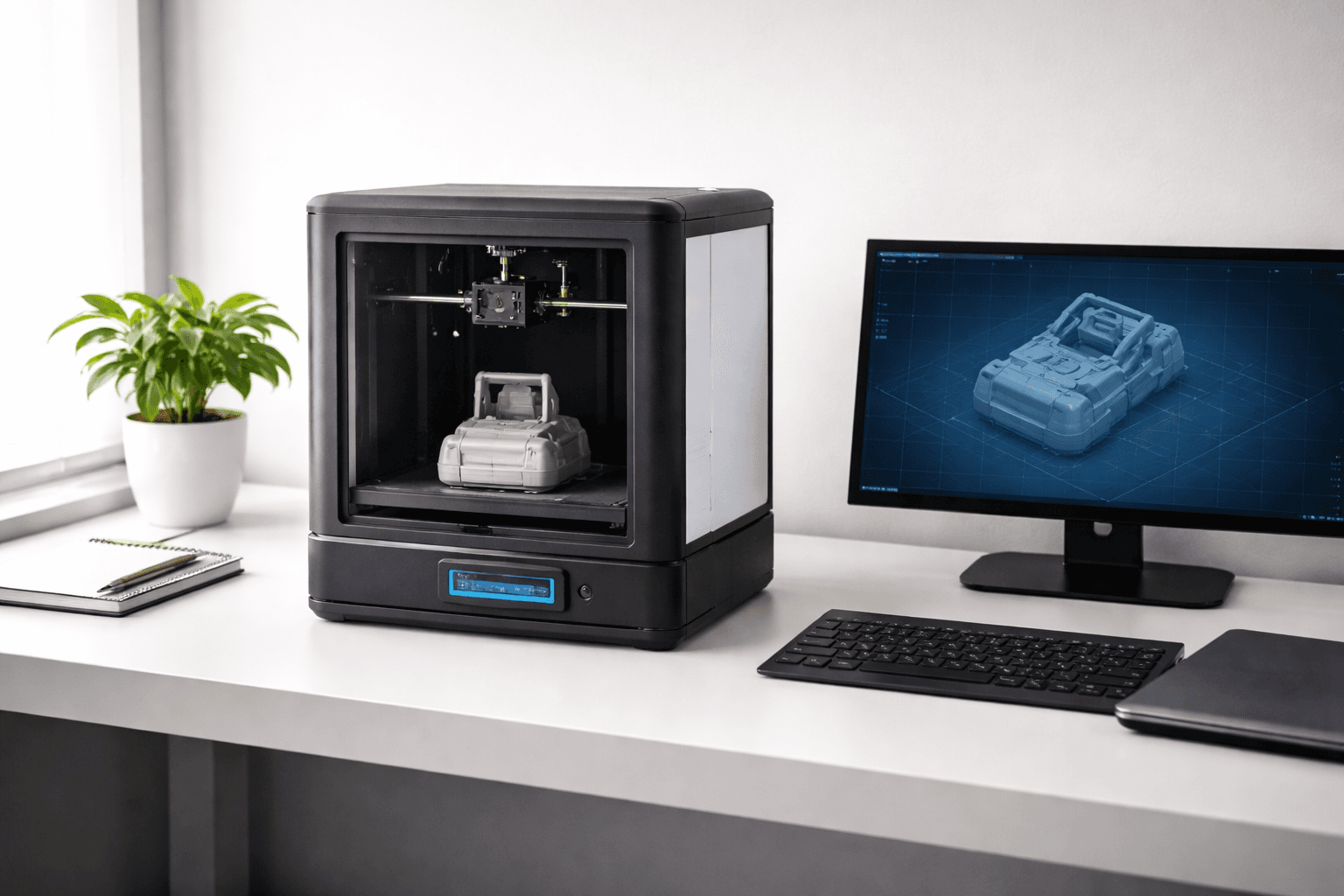
The Adventurer 5M Pro at $379 solves a problem most 3D printers ignore: what happens when children are in the room? The fully enclosed design physically prevents small hands from touching the 260-degree hotend. The HEPA filtration system captures ultrafine particles from melting plastic. A real concern for respiratory health in enclosed spaces like bedrooms and classrooms. Toolless nozzle swaps are genuinely useful in a family or educational context. Switching from a standard 0.4mm nozzle to a 0.6mm draft nozzle takes thirty seconds with no tools. Most other printers take ten-plus minutes. Print speed reaches 600mm/s. The enclosure allows ABS and ASA printing without the warping issues open-frame printers experience. The 220x220x220mm build volume is smaller than some competitors at this price, but handles most family and educational projects comfortably. Flashforge's software is solid but not as polished as Bambu Studio. This is not the fastest or largest printer under $500. It's the safest and most maintenance-friendly. In a school lab where a teacher needs to run it without becoming a 3D printing expert, or a home where kids will be using it, those qualities are worth more than raw speed.
Elegoo Saturn 4 Ultra
Best Resin Printer Under $500, Score: 7.8/10, $459
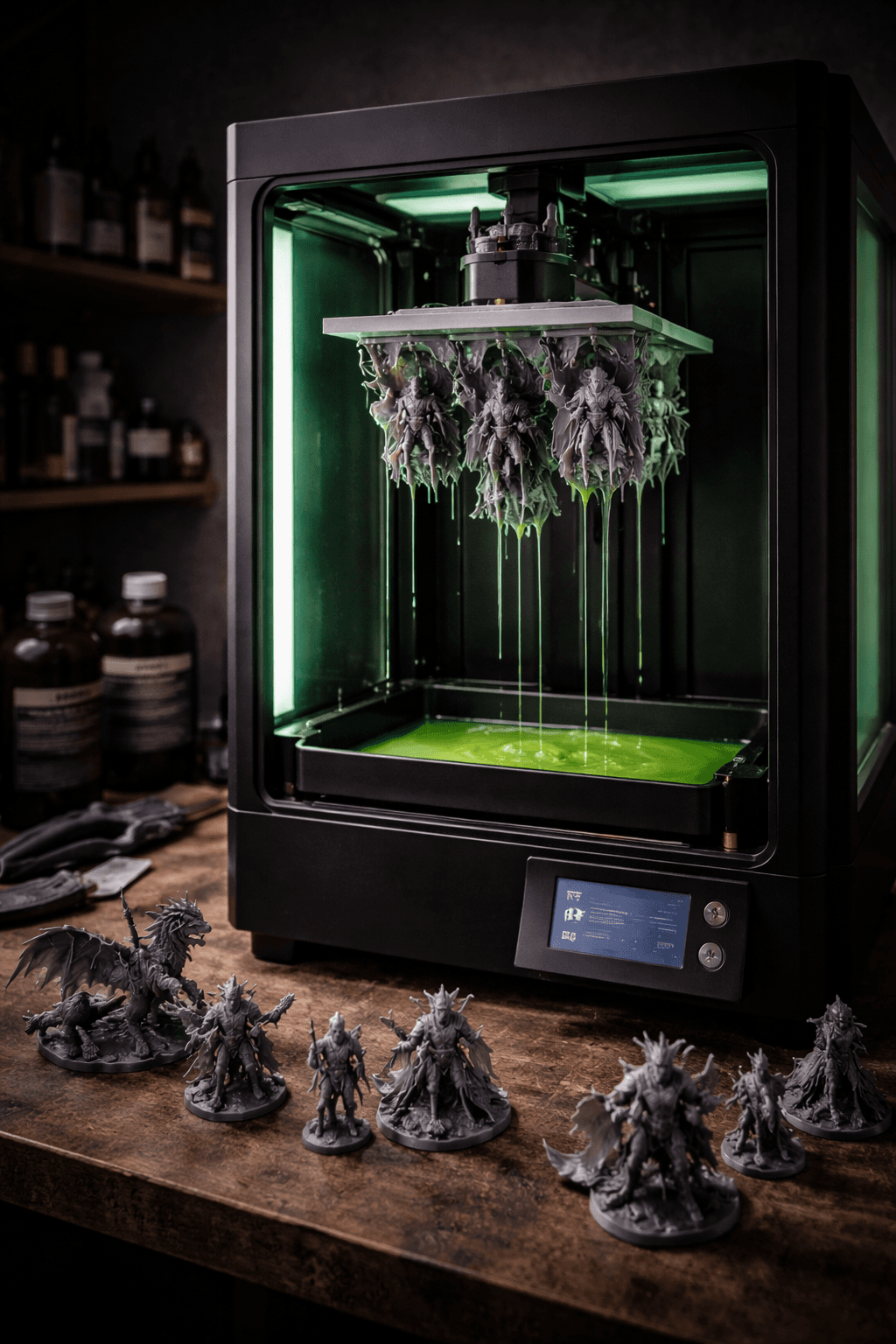
If your use case is resin, miniatures, jewelry prototypes, dental models, anything where sub-millimeter surface detail matters, the Elegoo Saturn 4 Ultra at $459 is the best option in this range. The 12K mono LCD spans a 218x123mm build plate. Large enough to print an entire Warhammer squad, a full D&D terrain set, or multiple jewelry rings in one run. That batch capability is the key differentiator over smaller resin printers. The Saturn lets you fill a plate. 19-micron XY pixels reproduce chainmail, faces, weapon details, and texture maps at a fidelity that looks injection-molded. The tilt release mechanism reduces peel forces dramatically, improving success rates on delicate overhangs and thin features. Print speed reaches 150mm/hour with fast resin. A full plate of miniatures completes in 2-3 hours. Post-processing is the same as any resin printer: IPA wash, UV cure, support removal. Budget an extra $100-150 for a wash-and-cure station. For users who need resin quality and want to print in volume rather than one piece at a time, this is the right choice in this price bracket.
The Bottom Line
The A1 Combo at $399 is the best starting point for most buyers in this range. Multi-color printing, fast speeds, excellent software in one polished package. Print engineering materials that need high-temperature stability? The QIDI X-Plus 3's active chamber heating at $499 is remarkable value. Families and schools should look at the Flashforge Adventurer 5M Pro's enclosed, HEPA-filtered design. Resin users who print in volume will find the Elegoo Saturn 4 Ultra's 218mm build plate the most productive option under $500.
Our Pick
The A1 Combo is our top pick under $500. Four-color printing, 500mm/s speed, and Bambu's polished software all for $399. Nothing else in this range comes close.
Related Articles
5 Best Quiet 3D Printers for Apartments in 2026
Living in an apartment doesn't mean you can't 3D print. These are the quietest printers that won't disturb your neighbors or your sleep.
Best Enclosed 3D Printer 2026: 5 Picks from $379 to $549, One Clear Winner
ABS, ASA, and nylon need an enclosure. Our picks from $379 (Flashforge Adventurer 5M Pro) to $549 (Bambu P1S), with a clear verdict for apartment use, engineering filaments, and budget buyers.
Best 3D Printers for Schools & Classrooms in 2026
Safety, ease of use, and HEPA filtration. The 3D printers that actually work in school environments without becoming a full-time maintenance job.