P1S vs X1 Carbon: Is the Upgrade Worth $600?
Bambu Lab P1S ($599) vs X1 Carbon ($1199): enclosed siblings with very different price tags. Is the extra $600 justified?
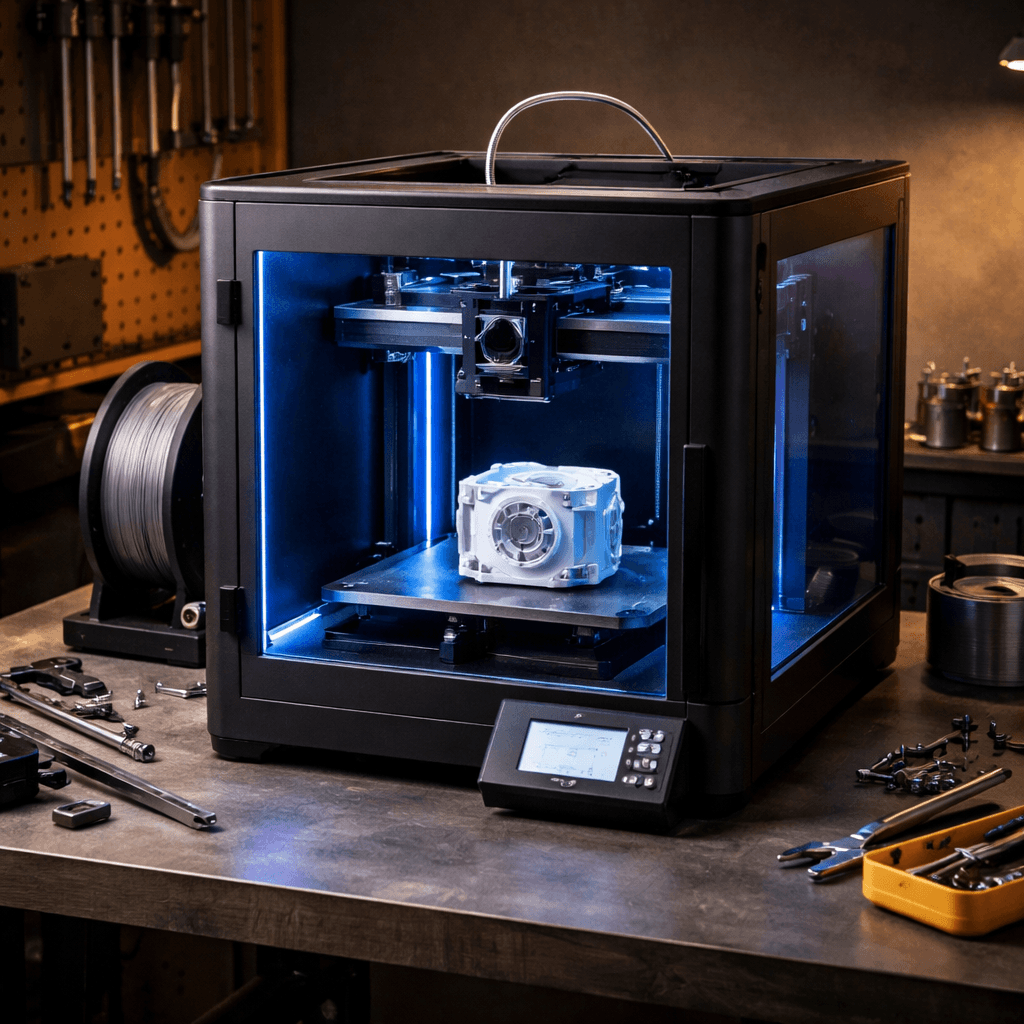
Bambu Lab P1S
Bambu Lab P1S ($599) — Score: 9/10 — $599
The P1S is, by almost every measure, the sweet spot in Bambu Lab's lineup. It's enclosed — meaning you can print ABS, ASA, and Nylon without warping from drafts. It has HEPA filtration, which reduces fumes enough to use in an office or shared space. It's AMS-compatible for multi-material printing. It runs at the same 500mm/s as the X1 Carbon. And Bambu Studio's pre-tuned profiles make printing with standard and engineering filaments completely straightforward. The print quality is excellent — dimensional accuracy, surface finish, and layer adhesion are all class-leading for consumer printing. The P1S uses a standard brass nozzle, which is entirely adequate for PLA, PETG, ABS, ASA, TPU, and most engineering-grade filaments. The limitation is abrasive materials: carbon fiber composites, glass-filled Nylon, and metal-fill filaments will wear out a brass nozzle within a few hundred grams. You can buy a hardened nozzle for the P1S separately (around $15), which is a reasonable workaround if you occasionally print abrasive materials. The passive chamber heating reaches roughly 40-45°C, which is sufficient for ABS and ASA. For 95% of users who print PLA, PETG, and occasional ABS, the P1S is everything they need at a price that makes sense.
Bambu Lab X1 Carbon
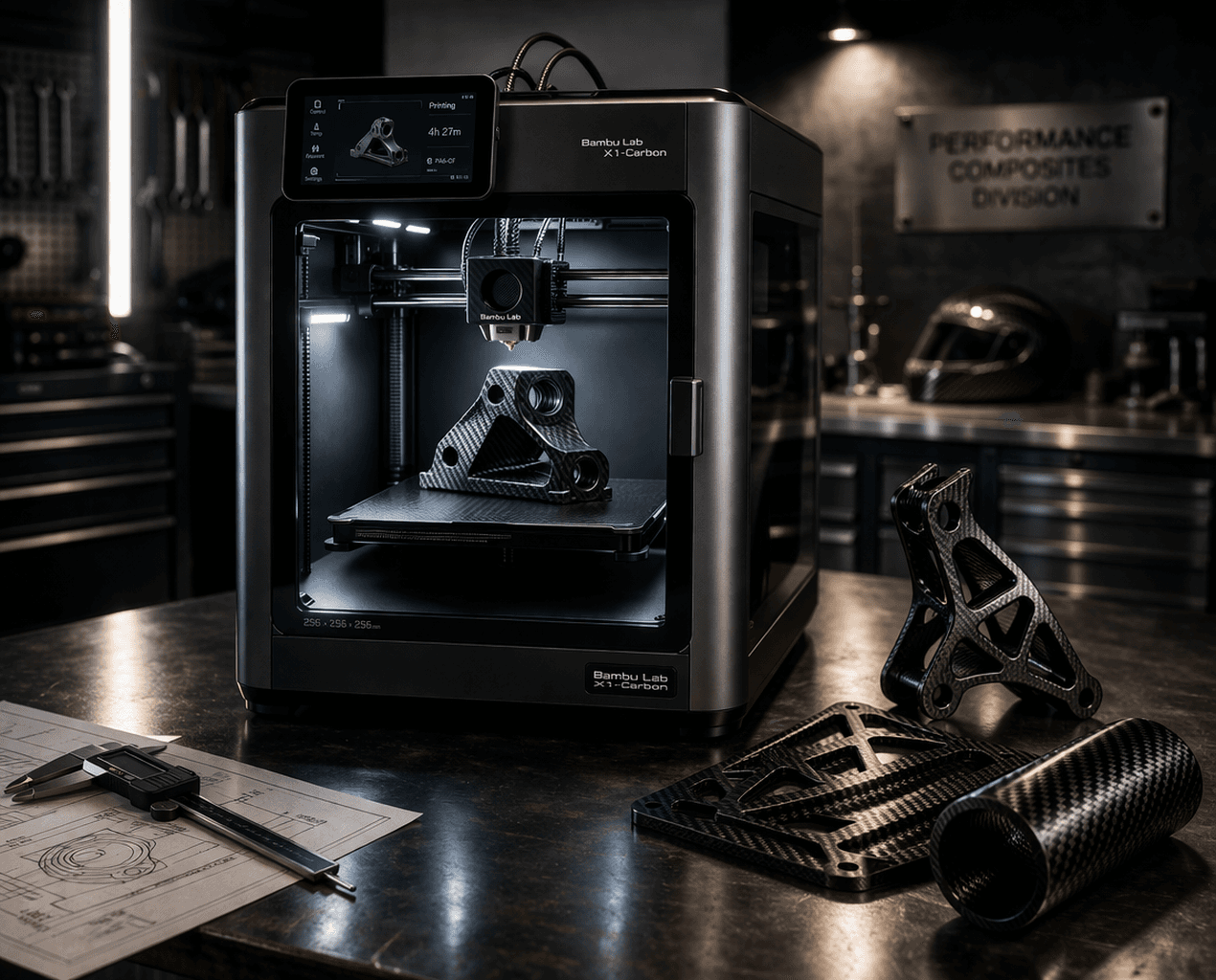
Bambu Lab X1 Carbon ($1199) — Score: 8.6/10 — $1199
The X1 Carbon costs exactly twice the P1S and delivers three meaningful hardware additions. First: the hardened steel nozzle, which comes standard and handles carbon fiber, glass-filled filaments, and any abrasive composite material without degrading. If you print Nylon CF, PA-GF, or metal-fill regularly, this alone justifies a portion of the premium — hardened nozzles last 10-50x longer than brass with abrasive materials. Second: the LiDAR first-layer inspection system. Before each print, the X1C scans the first layer in real time and automatically adjusts Z offset if adhesion looks poor. This feature genuinely reduces failed prints on long, unattended jobs — the camera shows you what happened, but the LiDAR prevents it from getting worse. Third: a suite of additional sensors including a filament flow sensor and spaghetti detection AI camera. Together these give you a more automated, less supervised printing experience — crucial if you're running long prints overnight or managing multiple jobs. The build volume (256mm) and print speed (500mm/s) are identical to the P1S. The AMS compatibility is the same. The HEPA filter is the same. You're paying $600 more for the hardened nozzle, LiDAR, and sensor suite. For home hobbyists who print PLA and PETG: the P1S wins. For engineers, prototyping labs, or anyone printing abrasive engineering filaments as a regular workflow: the X1 Carbon's extras pay back over time in fewer failed prints and longer nozzle life.
The Bottom Line
Buy the P1S if you print PLA, PETG, ABS, and standard engineering filaments — the $600 savings is real money, and the print quality difference is negligible. Buy the X1 Carbon if you regularly print carbon fiber, glass-filled Nylon, or other abrasive composites, or if you need LiDAR-assisted first-layer reliability for unattended production runs. Most users will never need the X1 Carbon's extras; if you're in that 5%, you'll know it.
Related Articles
Bambu Lab P1S vs QIDI X-Plus 3: Best Enclosed Printer Under $600?
Two enclosed printers, two different philosophies. Compare features, materials, and value.
Bambu Lab X1 Carbon vs Prusa MK4S: Speed vs Heritage
The $1199 speed king vs the $799 reliability legend. Two philosophies, one choice.
QIDI X-Plus 3 vs Bambu P1S: Budget Enclosed Showdown
QIDI X-Plus 3 ($499) vs Bambu Lab P1S ($599): the battle for best enclosed printer value. Active heating vs better software.