30 Best Things to 3D Print as a Beginner (Actually Useful)
Skip the benchies, these are genuinely useful prints that teach you 3D printing skills along the way.
Top pick in this guide
Bambu Lab A1 Mini
$199, PrintPick score 9.2/10. Check the live price before it moves.
Bambu Lab A1 Mini
Beginner: Household and Desk Items, Score: 9.2/10, $199
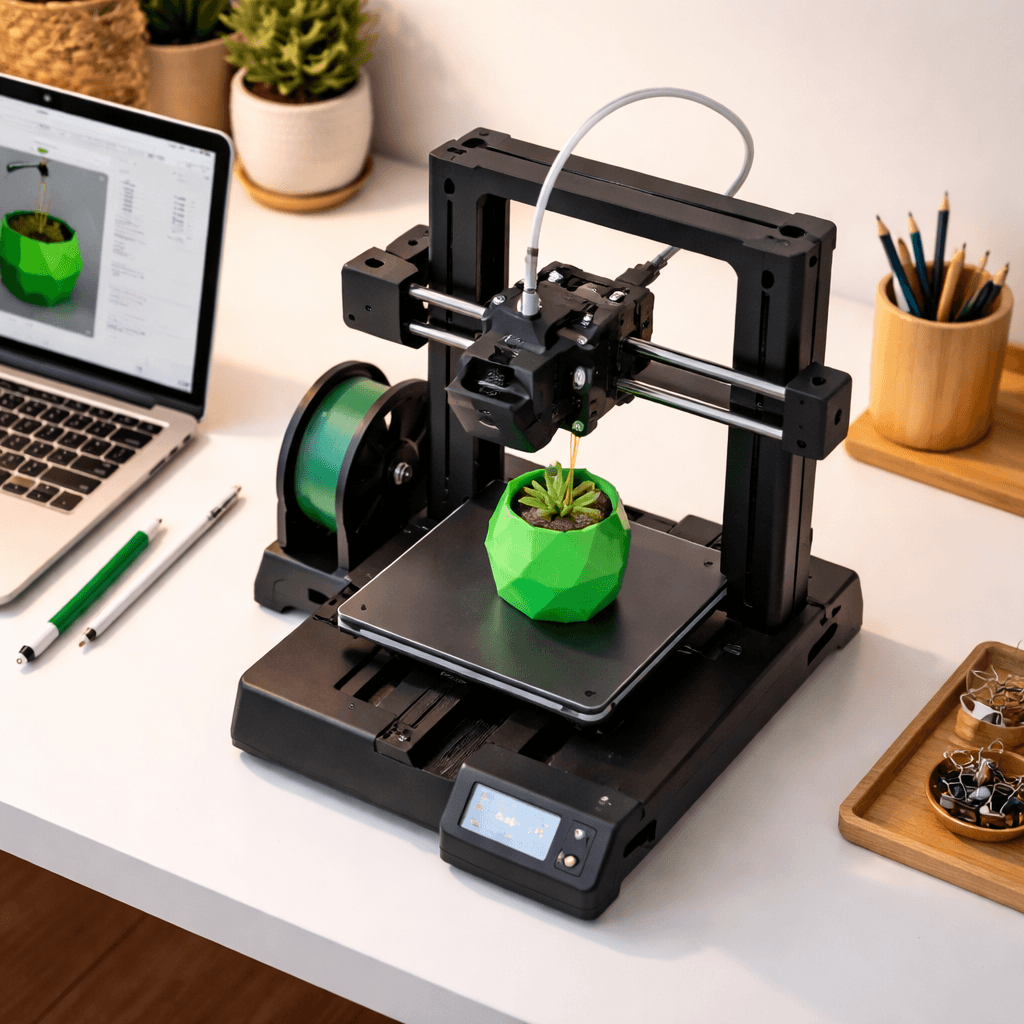
Start here. These projects use simple geometry, require no supports, and teach the core skills: bed adhesion, layer height selection, infill percentage, and understanding how print orientation affects strength. Cable clips (10 minutes, 3g of filament): the simplest possible print. Wall-mount them to organize charging cables, desk cables, or headphone cords. Print 10 of them and you will have used a printer 100 times in the first week, which is worth more than any guide. Phone stand (30 minutes, 15g): a tilted platform to hold your phone on your desk. Every household needs one and replacing a $5 phone stand with a custom-sized, custom-colored one is the moment 3D printing clicks. Drawer organizer inserts (45-90 minutes, 50-100g): sized to the exact dimensions of your utensil drawer, spice cabinet, or junk drawer. Search 'parametric drawer organizer' on Printables to find models where you enter your dimensions. Headphone hook (20 minutes, 20g): mounts under a desk to hold headphones when not in use. Plant pot (1-2 hours, 80-150g): geometric planters look expensive and cost $1-2 in filament. Cable management boxes to hide power strips (2-3 hours, 200g): print in black to match furniture. Each of these projects teaches you something: cable clips teach you about first-layer adhesion; the phone stand teaches you about overhangs and when supports are needed; drawer organizers teach you about dimensional accuracy and tolerances.
Bambu Lab A1 Combo
Intermediate: Mechanical and Assembly Projects, Score: 9.2/10, $399
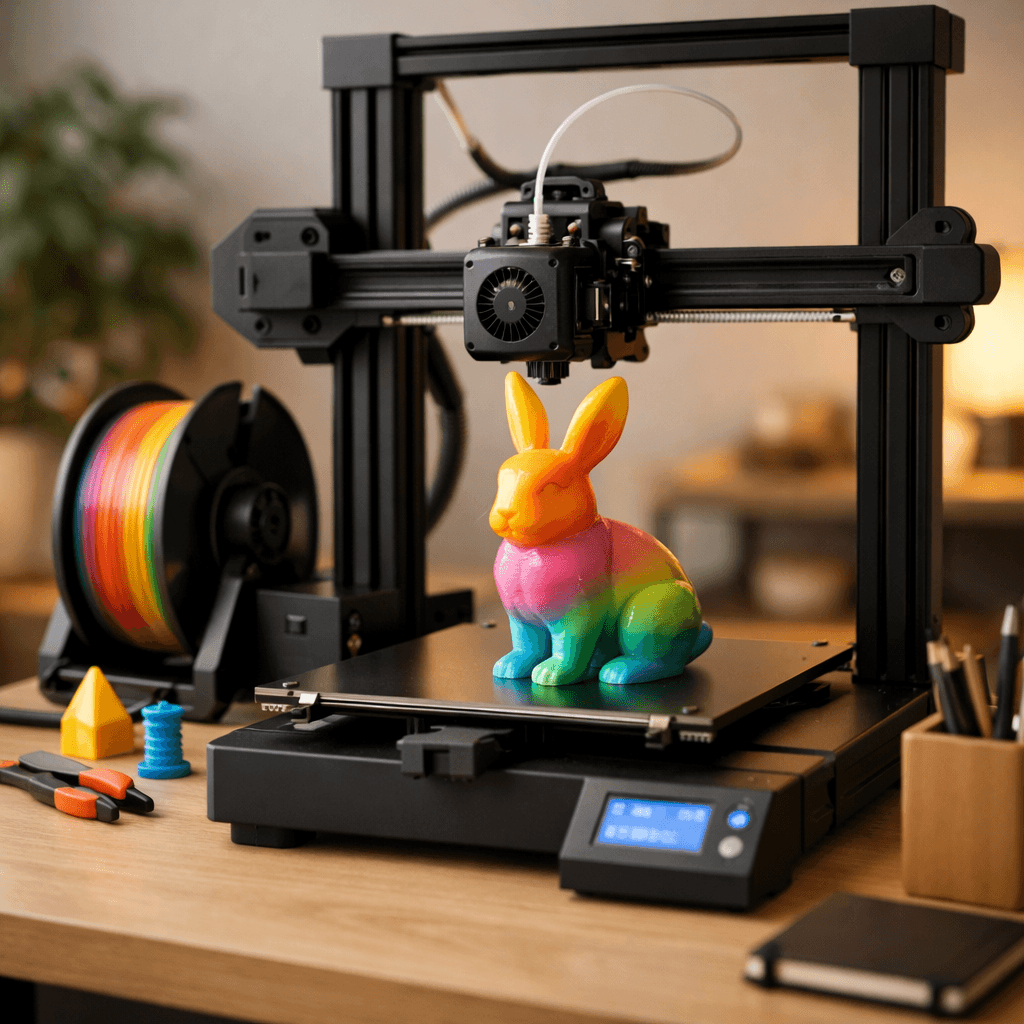
Once you have reliable first layers and understand basic slicer settings, these projects teach precision, multi-part assembly, support structures, and bridging. Articulated animals (2-4 hours, 50-100g): print-in-place articulated creatures where every segment is printed as an assembled, functional mechanism with no glue required. The dragon and axolotl are the most popular. These teach you about clearance tolerances, how much space to leave between moving parts so they do not fuse during printing. Replacement parts for broken household items (varies): this is where the printer pays for itself. A washing machine knob, a vacuum cleaner clip, a refrigerator shelf bracket, a toy's broken wheel. Measure the broken part with calipers, find a matching model online or design one in Tinkercad, and print a replacement for $0.20-1.00 in filament. Electronics enclosures (2-6 hours, 100-300g): snap-fit boxes sized for Raspberry Pi boards, Arduino microcontrollers, or custom circuits. These teach you about wall thickness, snap-fit joint design, and the importance of consistent tolerances. Lithophane night light (3-5 hours, 150g): a flat panel with varying thickness that displays an image when backlit. Upload a photo to an online lithophane generator, download the STL, print in white PLA, and back-light it with an LED strip. Personal photographs become stunning night lights. Multi-part assemblies (varies): larger objects split into multiple pieces that connect with printed joints, heat-set inserts, or hardware. Teaches glue-up techniques, design for assembly, and how different print orientations affect strength.
Elegoo Mars 5 Ultra
Advanced: Detail Work and Resin Printing, Score: 8.2/10, $284
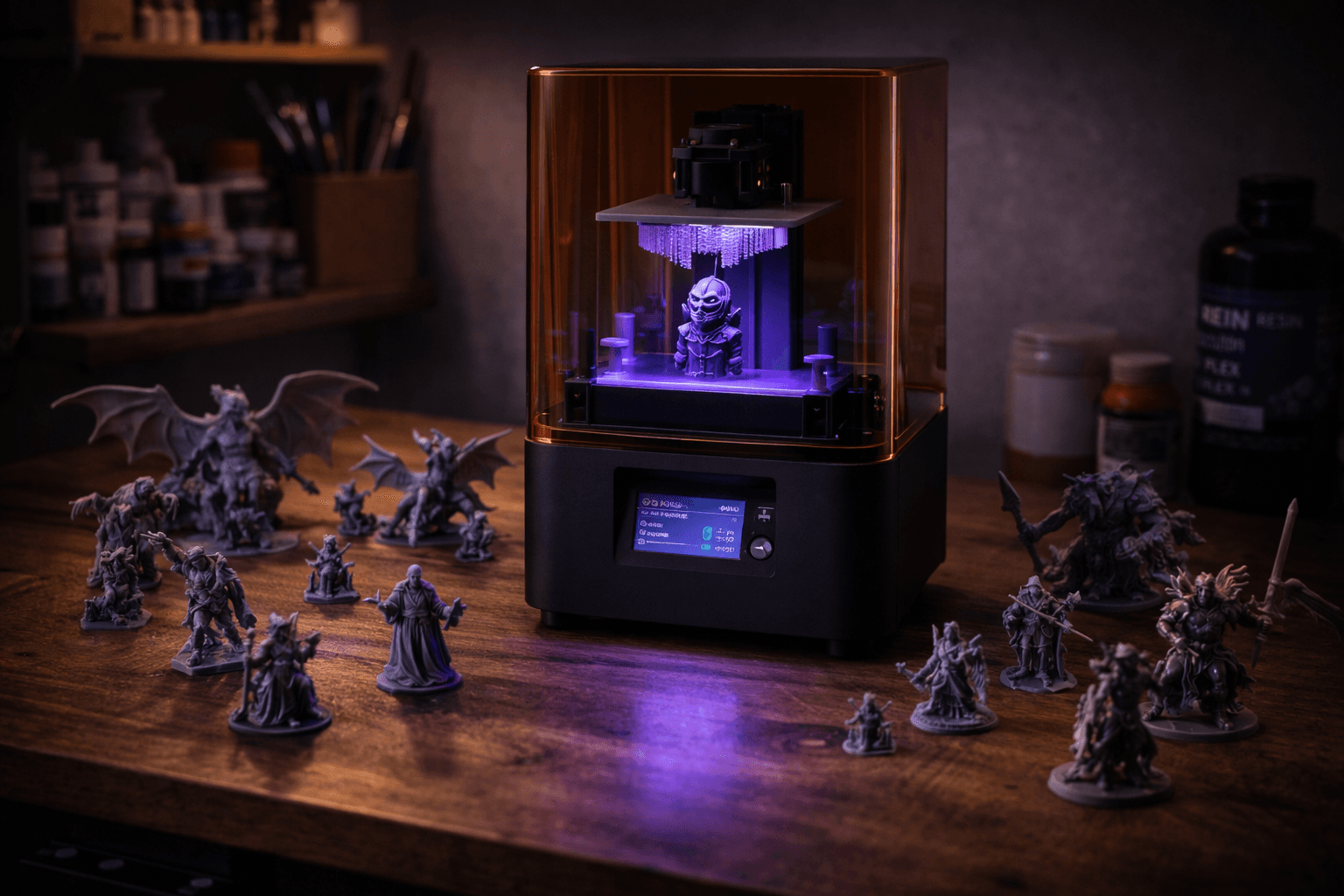
Resin printing requires a second machine (an MSLA resin printer like the Elegoo Mars 5 Ultra) but opens up categories of prints that FDM fundamentally cannot match. If you own or plan to own a resin printer, these projects represent the highest visual quality ceiling available to hobby makers. Tabletop miniatures (1-3 hours per batch): D&D character miniatures, Warhammer armies, and custom campaign monsters are the killer app for resin printing. Download free miniature STL files from Printables, Thingiverse, or paid marketplaces like MyMiniFactory and Cults3D. A batch of four 28mm miniatures costs $0.20-0.40 in resin and takes 2 hours. Painting them is a hobby in itself, the miniature painting community on YouTube and Reddit is extensive and welcoming to beginners. Jewelry prototypes and pendants (30-90 minutes each): resin-printed rings, pendants, and earrings are indistinguishable from professionally produced pieces at tabletop scale. Standard hobby resin produces pieces good for personal wearing. Castable resin enables investment casting into silver, bronze, or gold at a local jewelry shop for $20-50 in casting fees. D&D terrain (2-6 hours per piece): modular dungeon tiles, castle walls, forest terrain, and cave systems. Search 'printable scenery' or 'terrain STL free' for thousands of files. A full dungeon tile set for a campaign costs $5-20 in resin versus $200+ for commercially produced plastic terrain. Architectural scale models (4-12 hours): house plans, city planning models, and historical recreations at scales like 1:200 or 1:500 where resin's fine resolution reproduces architectural details that FDM cannot.
The Bottom Line
The fastest path to getting value from a 3D printer is to pick five items from the beginner list that solve actual problems in your home, print them in the first week, and build the reflex of thinking 'I could print that' before you reach for Amazon. Thingiverse and Printables have free STL files for every project mentioned in this guide, search the project name and you will find dozens of options. Tinkercad is the right starting point for designing your own models: it is browser-based, free, and takes about two hours to learn at a functional level. The jump from printing other people's models to designing your own is where 3D printing transforms from a cool toy into a genuinely useful tool.
Related Articles
FDM vs Resin 3D Printers: The Complete Guide for 2026
FDM or resin? The definitive comparison covering cost, quality, speed, safety, and best use cases.
How Much Does 3D Printing Actually Cost in 2026?
Real numbers: printer cost, filament, electricity, maintenance, and failed prints. Total cost of ownership breakdown.
Best Things to 3D Print and Sell (Actually Profitable in 2026)
What sells, what doesn't, and realistic profit margins for each category of 3D printed products.