Best Things to 3D Print and Sell (Actually Profitable in 2026)
What sells, what doesn't, and realistic profit margins for each category of 3D printed products.
Top pick in this guide
Elegoo Mars 5 Ultra
$284, PrintPick score 8.2/10. Check the live price before it moves.
Elegoo Mars 5 Ultra
Tabletop Gaming: Miniatures and Terrain, Score: 8.2/10, $284
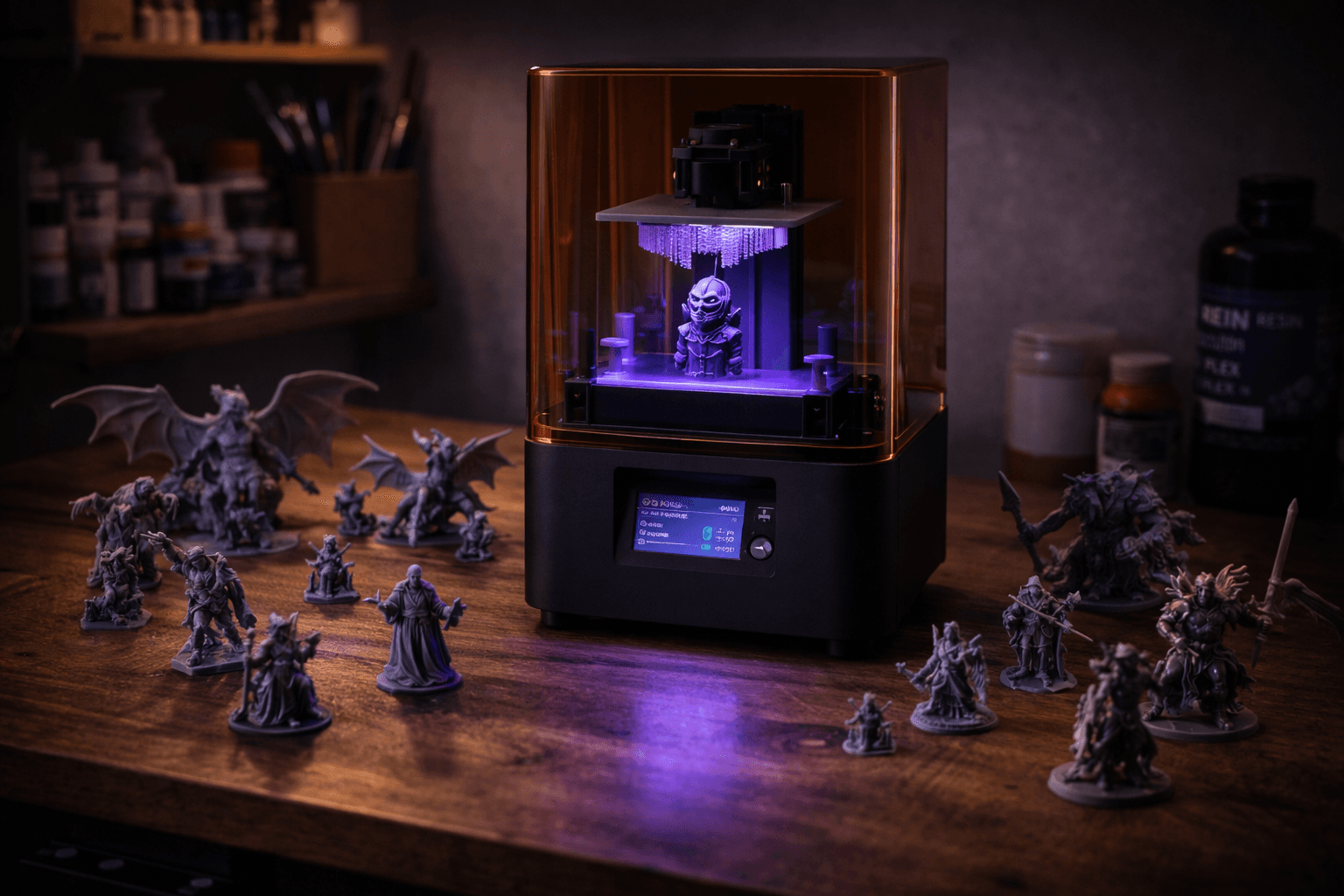
The tabletop gaming miniature market is the most reliably profitable category in consumer 3D printing. The core reason: the tabletop community has an established culture of paying premium prices for quality and customization, developed over decades of buying expensive Games Workshop products. A Warhammer Space Marine costs $8-12 from Games Workshop. A resin-printed equivalent costs $0.25-0.50 in material and sells for $10-20. A custom D&D character miniature (player describes their character, seller modifies or commissions a matching sculpt) sells for $25-60 because it is genuinely unique. D&D terrain sets are where the economics scale: a complete dungeon starter set with 20 modular tiles costs $8-15 in resin and sells for $80-150 on Etsy. Buyers understand they are paying for print time and design work, not the material. The three best-selling subcategories on Etsy and MyMiniFactory: custom character miniatures for D&D players (highest per-unit price), complete terrain sets for game masters (highest order value), and faction-specific army units for Warhammer and similar games (highest repeat purchase rate). Platform strategy: Etsy for individual consumers and casual buyers. Patreon for a subscription model where subscribers pay $5-15/month for a monthly miniature pack, top creators earn $3,000-15,000/month from Patreon alone. MyMiniFactory for selling digital STL files (print-at-home licenses) alongside physical prints. The Elegoo Mars 5 Ultra at $284 is the right starting machine, 14K resolution produces prints indistinguishable from injection-molded at tabletop scale, and the 153x77mm build plate handles full squad batches.
Bambu Lab A1 Combo
Home Decor: Multi-Color Planters, Vases, and Lamps, Score: 9.2/10, $399
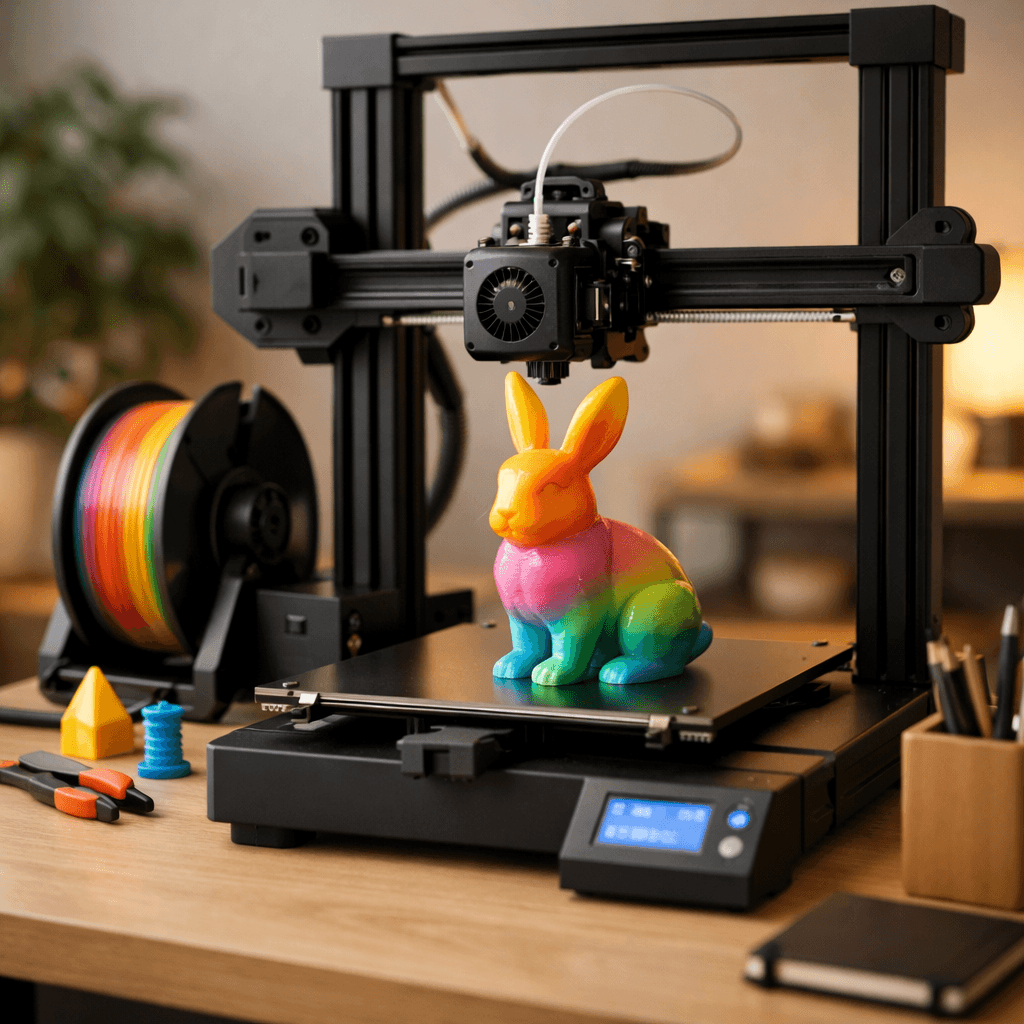
Home decor is the second-most successful category for FDM sellers, and the Bambu Lab A1 Combo's multi-color capability is the competitive differentiation that separates good sellers from struggling ones. Generic single-color geometric vases compete with $8 Amazon products. Multi-color gradient vases, lithophane lamps with personal photographs, and color-blocked planters with embedded patterns look expensive in ways that single-color prints do not, commanding $20-50 versus $8-15 for comparable single-color items. The three best-performing home decor products on Etsy: lithophane lamps (personalized photograph translucent panels backlit with LED, $25-60 each with essentially no competition from mass production because they require a specific customer's photo), gradient planters (printed in two complementary colors with a clean transition, $18-30 each, photographed beautifully they look like ceramic), and cable organizers and desk accessories with embedded branding or personalization ($12-25 each with name or initials). Photography is the multiplier in this category. The same planter photographed on a plain white background versus styled on a wooden shelf next to a succulent can differ by $10 in conversion rate, not in quality, but in perceived value. A $30 lightbox and 30 minutes of photo editing per product is a high-ROI investment for home decor sellers. The A1 Combo's AMS Lite enables the multi-color gradients and two-tone effects that make these products visually distinctive. Selling platform: Etsy is the right primary channel, with Instagram and Pinterest driving discovery traffic.
Creality K1 Max
Cosplay: Helmets, Props, and Armor Commissions, Score: 8/10, $599
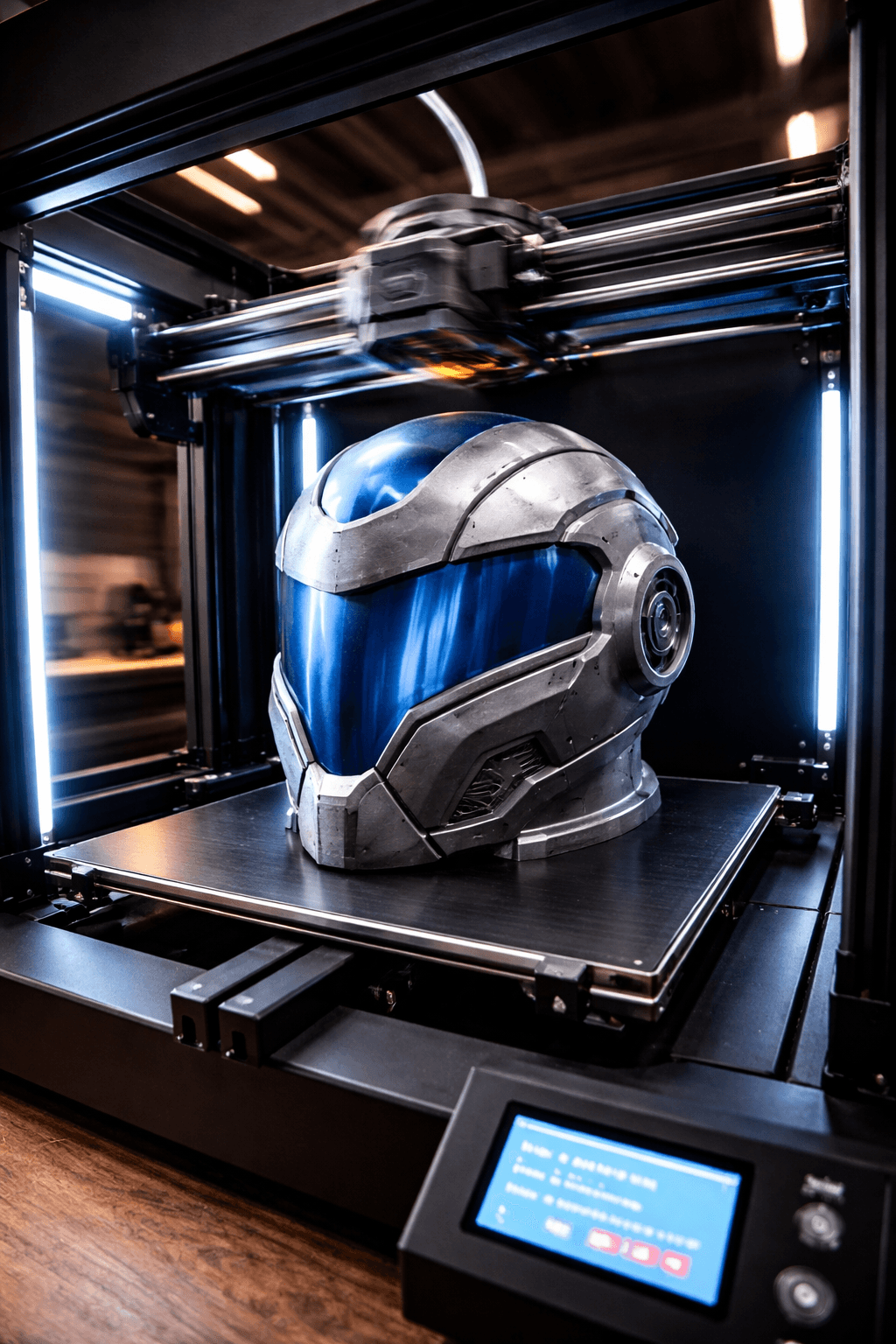
Cosplay commissions are the highest-ticket category in consumer 3D printing, individual commissions regularly run $200-800, and complete armor sets for convention characters can reach $1,500-3,000. The economics are correspondingly labor-intensive: a finished Mandalorian helmet involves 10-14 hours of print time, 4-8 hours of post-processing (sanding, priming, painting, weathering), and 2-4 hours of client communication and fitting. At $400 for a finished helmet, that is $25-35 per hour including all labor. As skills develop and reputation builds, prices rise and efficiency improves. The Creality K1 Max at $599 is the minimum machine specification for serious cosplay work. The 300x300x300mm build volume prints a full-size Mandalorian helmet (approximately 280mm tall, 260mm wide) in one piece. The AI camera enables monitoring 12-hour overnight prints without physical presence. Print speed at 600mm/s means a full helmet completes in 10-14 hours rather than 24-36 hours on slower machines. Material for a helmet: 500-800g of PLA or PETG at $7-20 in filament. The business development path: build a portfolio by printing and finishing helmets for your own collection (or friends at cost). Photograph the finished pieces professionally with appropriate cosplay context. List on Etsy with clear specifications and timeline. Post process photos on Instagram and Reddit cosplay communities. Commission inquiries follow portfolio quality. The most requested helmets for commissions in 2026: Mandalorian (multiple variations), Halo Master Chief and ODST, Iron Man (multiple suits), Clone Trooper, Destiny Titan class armor, and Horizon Zero Dawn Aloy armor pieces. Learning post-processing (sanding grits, filler primer, acrylic paint, weathering techniques) is as important as learning to print, clients pay for finished quality, not raw prints.
The Bottom Line
The most profitable 3D printing products share one characteristic: they provide customization, niche specificity, or design quality that mass production genuinely cannot replicate. Generic items compete with Amazon and lose. Custom D&D miniatures, personalized lithophane lamps, and one-of-a-kind cosplay commissions compete with nothing because they are individually made. Start with one category that matches your existing interests, if you play D&D, start with miniatures; if you attend conventions, start with cosplay. Build depth in one niche before expanding, photograph your work professionally, and price for your time plus materials rather than competing on low prices. The path from first Etsy listing to consistent monthly income is 3-6 months of consistent effort, not 3-6 weeks.
Related Articles
FDM vs Resin 3D Printers: The Complete Guide for 2026
FDM or resin? The definitive comparison covering cost, quality, speed, safety, and best use cases.
30 Best Things to 3D Print as a Beginner (Actually Useful)
Skip the benchies, these are genuinely useful prints that teach you 3D printing skills along the way.
How to Fix Stringing on Your 3D Printer: The Complete Guide
Stringing ruining your prints? Learn exactly how to fix it with retraction settings, temperature tuning, and more.