Best Enclosed 3D Printer 2026: 5 Picks from $379 to $549, One Clear Winner
ABS, ASA, and nylon need an enclosure. Our picks from $379 (Flashforge Adventurer 5M Pro) to $549 (Bambu P1S), with a clear verdict for apartment use, engineering filaments, and budget buyers.
Quick answer
Best enclosed 3D printer picks for 2026
Top pick in this guide
Flashforge Adventurer 5M Pro
$379, PrintPick score 8.6/10. Check the live price before it moves.
Flashforge Adventurer 5M Pro
Best Budget Enclosed Printer for Apartments and ABS, Score: 8.6/10, $379
At $379, the Adventurer 5M Pro is the lowest price point where you get a genuinely useful enclosed printer. Not a budget machine with an enclosure bolted on. A machine designed from the ground up to be enclosed. The HEPA filtration system captures ultrafine particles from melting plastic, making it genuinely safer in shared spaces. The toolless nozzle swap system is underrated: changing from a 0.4mm standard nozzle to a 0.6mm draft nozzle takes thirty seconds with no tools. Most other printers take ten-plus minutes. Matters when you switch between project types regularly. Print speed reaches 600mm/s maximum inside the enclosure. ABS and PETG print reliably at 200-300mm/s. The 220x220x220mm build volume is smaller than open-frame competitors at this price. But the enclosure makes the reliability difference. A 200mm ABS print that fails repeatedly on an open-frame machine will succeed consistently in the Adventurer's stable thermal environment. One limitation: the chamber doesn't actively heat. It relies on hotend warmth, reaching roughly 40-45 degrees ambient. Handles ABS and ASA well, falls short of what Nylon and PC require. For most users who want reliable ABS printing in a safe, filtered environment without spending $500+, this is the correct choice.
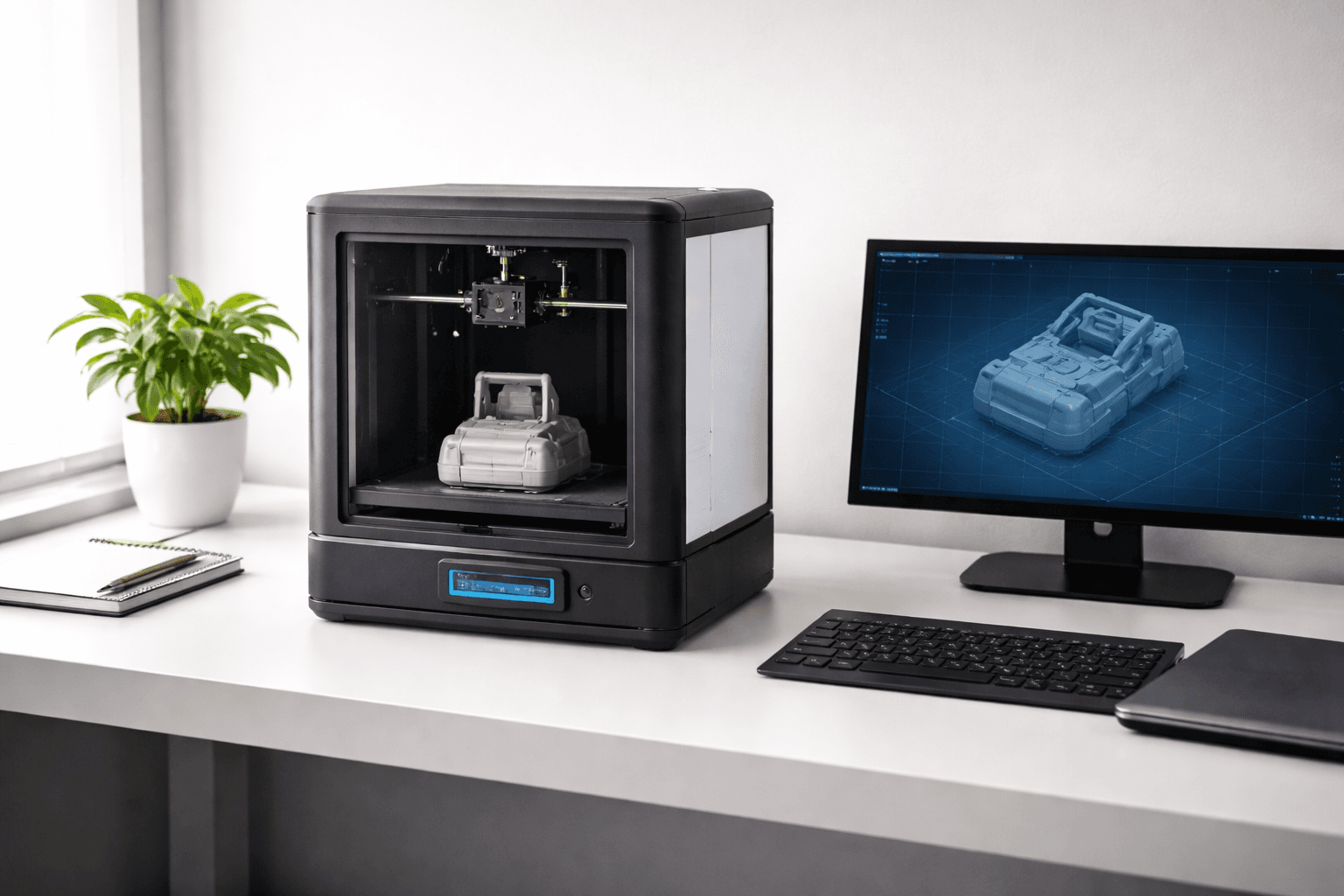
QIDI X-Plus 3
Best Budget Enclosed Printer for Nylon and PC, Score: 8.4/10, $499
The QIDI X-Plus 3 at $499 is the enclosed printer for anyone who takes engineering materials seriously. Active chamber heating to 60 degrees Celsius. A thermostatically controlled heater warms the enclosed chamber to a target temperature before and during printing, maintaining it throughout. That matters because 60 degrees is the threshold for genuine Nylon and Polycarbonate printing. Nylon (PA12, PA-CF) requires 50-60 degrees ambient to prevent delamination and warping. PC needs 50 degrees minimum. Passive enclosures relying on hotend warmth reach 40-45 degrees at best. The X-Plus 3 hits 60 degrees reliably, unlocking the full range of engineering thermoplastics: Nylon, PC, PA-CF, glass-filled Nylon, and TPU in an enclosed environment. 280x280x270mm build volume. Print speed tops out at 350mm/s, adequate for engineering use where accuracy matters more than throughput. The software is the weak point. QIDI's slicer works but feels several iterations behind Bambu Studio. Expect more time in settings. The tradeoff: $100 less than the Bambu P1S for a feature (active chamber heating) the P1S doesn't have. For engineering materials, the X-Plus 3 is the better choice. For reliability, software quality, and ecosystem, the P1S wins.
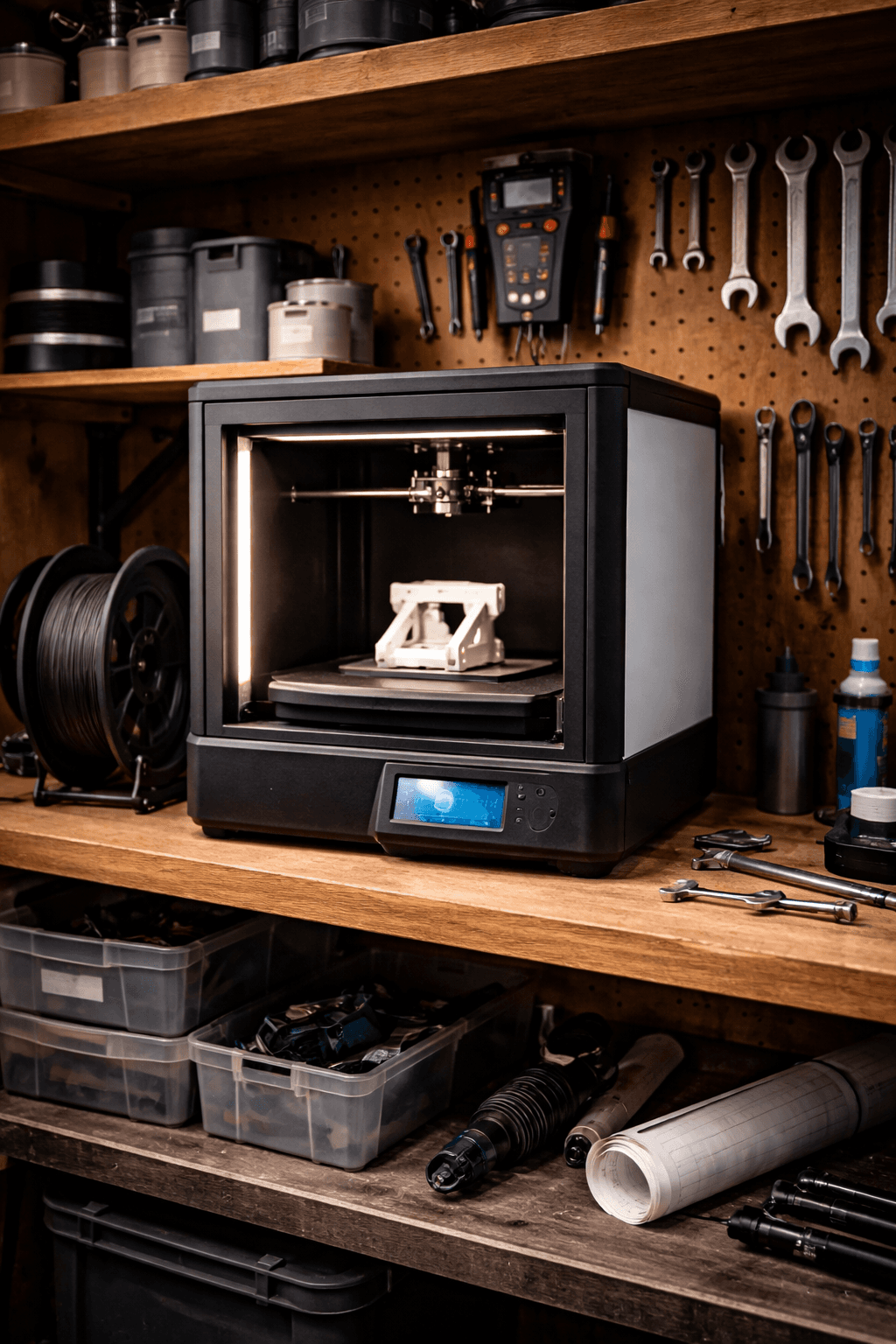
Bambu Lab P1S
Best Quiet Premium Enclosed Printer for Home Offices, Score: 9/10, $449
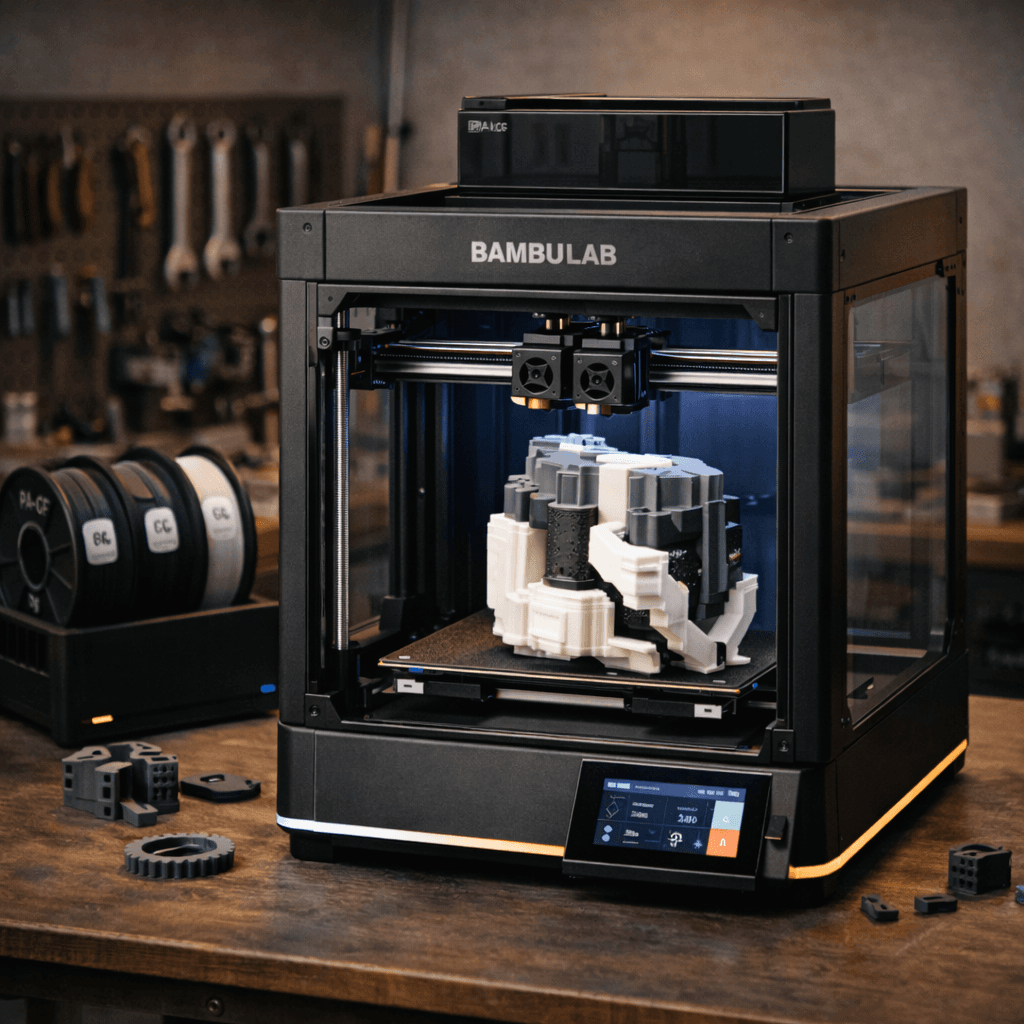
The Bambu Lab P1S at $599 is what professional makers, small businesses, and serious hobbyists default to. The reason is simple: it's the most reliable, best-supported enclosed printer available under $800, with the best software ecosystem in consumer 3D printing. The passive enclosure maintains roughly 40-45 degrees ambient during ABS printing. Not as hot as the QIDI X-Plus 3's active 60 degrees, but sufficient for ABS, ASA, and most PETG to print without warping. The integrated HEPA and carbon filtration handles fumes effectively. AMS compatibility (the multi-material unit is a separate $249) lets you print multi-color or multi-material jobs inside an enclosed chamber. Functional parts combining PLA bodies with dissolvable PVA supports, or PETG bodies with TPU flex zones. Bambu Studio's profiles for the P1S are exceptionally well-tuned. Most filaments print acceptably on default settings without manual tuning, which is rare in the enclosed printer category. Remote monitoring via camera and Bambu's cloud is mature and reliable. The honest limitation: at $599 with no active heating, users who specifically need Nylon or PC at scale are better served by the QIDI X-Plus 3 at $499. For everything below 50-degree requirements, the P1S is the safer long-term investment.
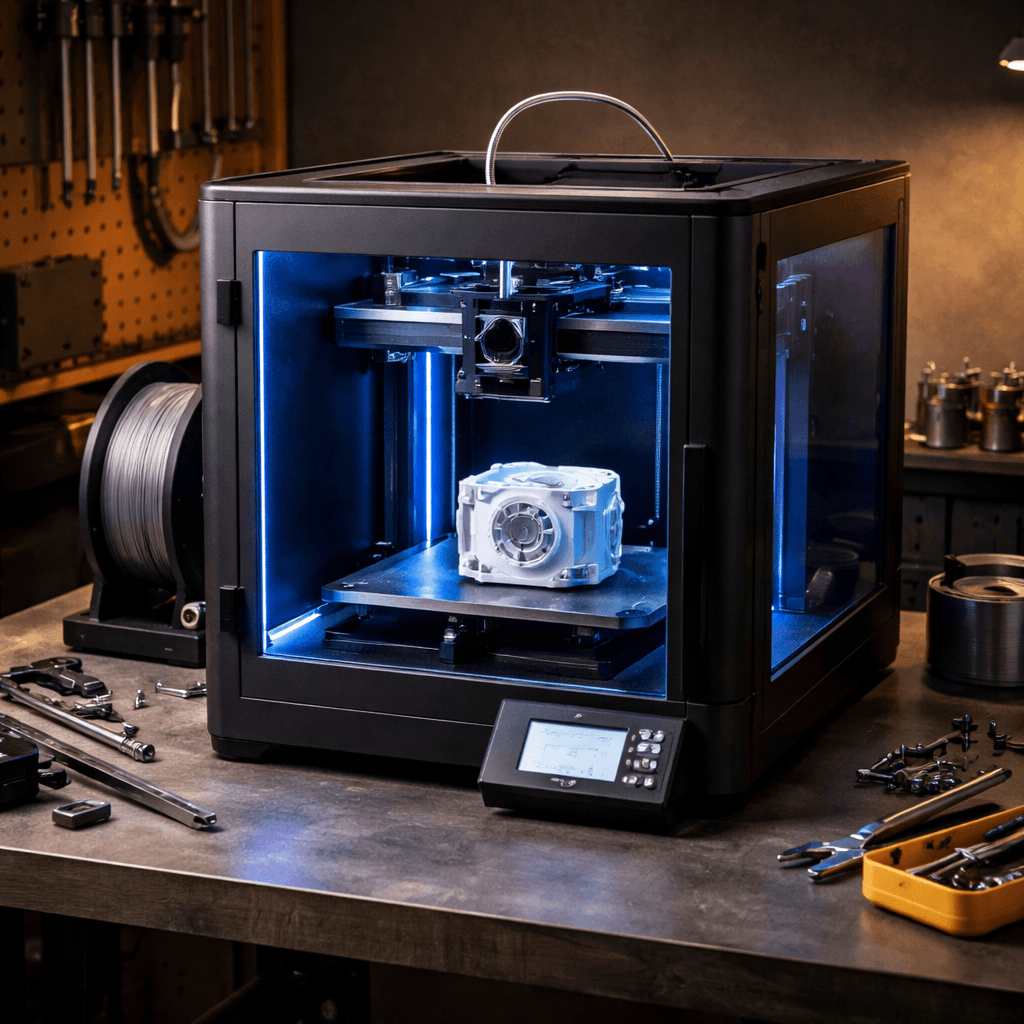
Creality K2 Plus
Best Large-Format Enclosed Printer, Score: 7.8/10, $899
The Creality K2 Plus solves a problem none of the others can: printing large parts in engineering materials without warping. The 350x350x350mm enclosed build volume is the largest in the consumer enclosed printer category. The choice for cosplay armor, large functional prototypes, and structural parts that exceed the 300mm ceiling of most enclosed machines. Active carbon filtration handles ABS and ASA fumes. The CFS multi-color system adds four-color capability inside the enclosure, enabling large multi-color cosplay props without post-print painting. At $899, this is a significant investment. The price reflects build volume, enclosure, active filtration, and multi-color in one machine. Matching that with separate components would cost more. The honest tradeoff: Creality's software ecosystem is still behind Bambu. The K2 Plus is designed for users who know what they're doing. Initial calibration requires more expertise than a P1S. Community support is strong but the K2 Plus is newer, so fewer guides exist. Best for serious cosplayers printing ABS armor, businesses producing large enclosed-environment parts, and power users who need maximum enclosed build volume at a consumer price.
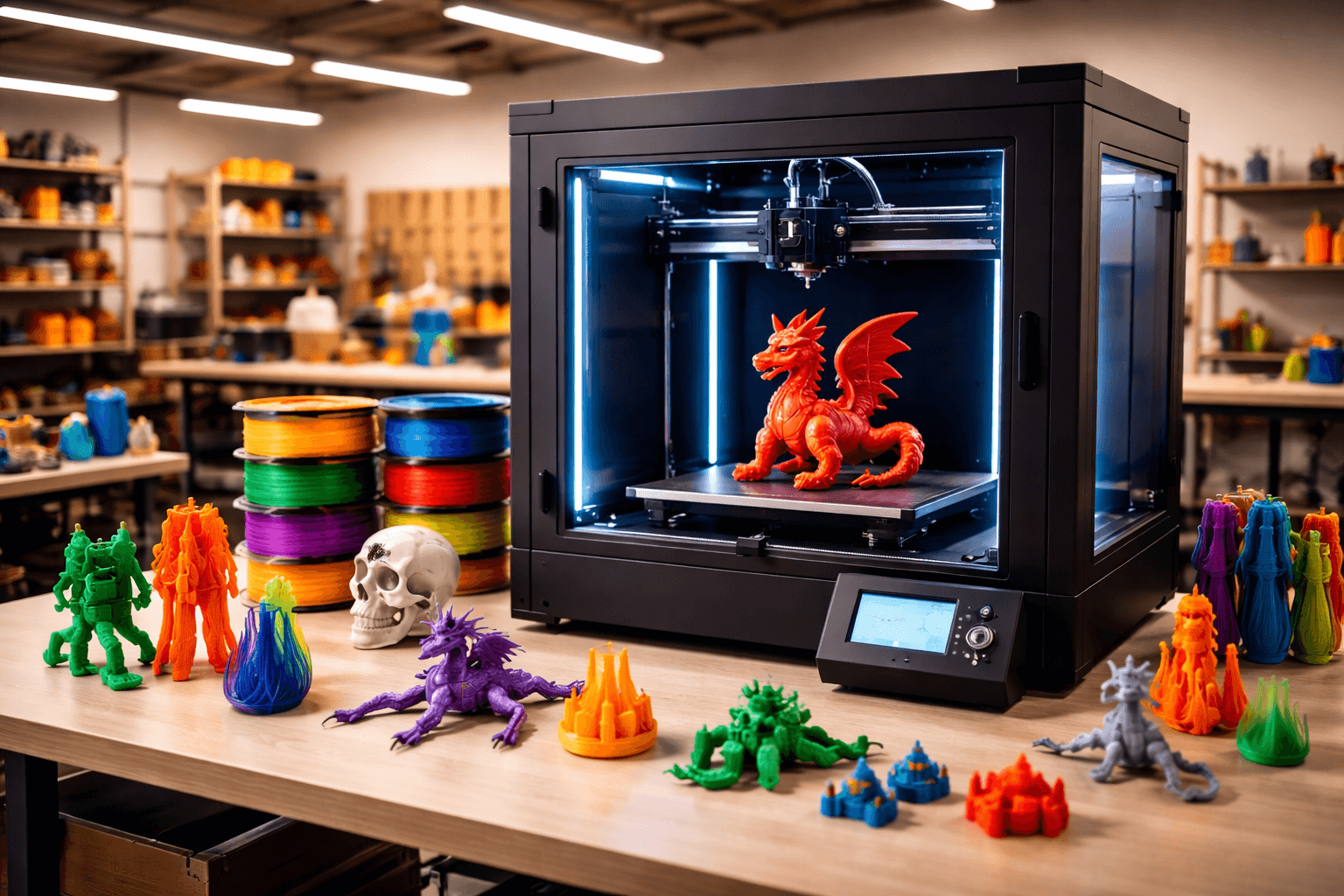
Bambu Lab H2D
Best for Abrasive Engineering Filaments, Score: 8.2/10, $1899
The Bambu Lab H2D at $1,899 is the enclosed printer for users who regularly print abrasive or highly engineered filaments. Carbon fiber-filled PLA and PETG, glass-filled Nylon, Polycarbonate. Materials that destroy standard brass nozzles in hours. Dual hardened steel nozzles come standard. A brass nozzle prints carbon-fiber PLA for 20-30 hours before wearing enough to affect quality. The hardened nozzles on the H2D remain dimensionally accurate for hundreds of hours. The 65C actively heated chamber enables printing with the most demanding engineering filaments without warping or delamination. Combined with multi-point auto-leveling and AI camera monitoring, first-layer adhesion failures are extraordinarily rare. The 325x320x325mm build volume is the largest in Bambu's lineup. Dual nozzles eliminate support-material purge waste. AMS 2 Pro compatibility adds multi-material. If you regularly print carbon fiber, glass-filled, or abrasive engineering filaments at scale, the H2D's dual hardened nozzles, heated chamber, and large build volume pay for themselves in productivity and fewer failures. For users printing primarily PLA, PETG, and ABS, the P2S at $549 is better value.
The Bottom Line
For most buyers, the best enclosed 3D printer is still the one that matches the material. Budget ABS, ASA, and apartment use: Flashforge Adventurer 5M Pro. Budget Nylon, PC, and engineering materials: QIDI X-Plus 3 because the 60C chamber matters more than brand polish. Quiet premium home-office printing: Bambu Lab P1S or P2S, depending on availability and price. Large enclosed parts: Creality K2 Plus. Abrasive engineering filaments and dual-nozzle work: Bambu Lab H2D. Do not pay for an expensive enclosure unless it solves your actual material, noise, fumes, or build-volume problem.
Our Pick
The P1S is our top enclosed pick for most buyers. HEPA filtration, active chamber heating, and Bambu's best-in-class software at $449. Handles ABS, ASA, and PETG without fuss.
Compare enclosed alternatives
If you already have two models in mind, these head-to-head pages answer the buyer-intent queries Google is surfacing now.
Related Articles
5 Best Quiet 3D Printers for Apartments in 2026
Living in an apartment doesn't mean you can't 3D print. These are the quietest printers that won't disturb your neighbors or your sleep.
Best 3D Printers Under $500 in 2026
Under $500 now gets you multi-color, CoreXY motion, enclosed designs, and features that cost $1,000+ just two years ago.
Best 3D Printers for Small Business in 2026
Starting a 3D printing business? Reliability and uptime matter more than peak specs. These are the printers production environments actually run.