Safe vs Smart: Adventurer 5M Pro vs A1 Mini
Flashforge Adventurer 5M Pro vs Bambu Lab A1 Mini: enclosed safety vs open-frame value. Which is the better beginner printer?
Top pick in this guide
Flashforge Adventurer 5M Pro
$379, PrintPick score 8.6/10. Check the live price before it moves.
Flashforge Adventurer 5M Pro
Flashforge Adventurer 5M Pro ($379), Score: 8.6/10, $379
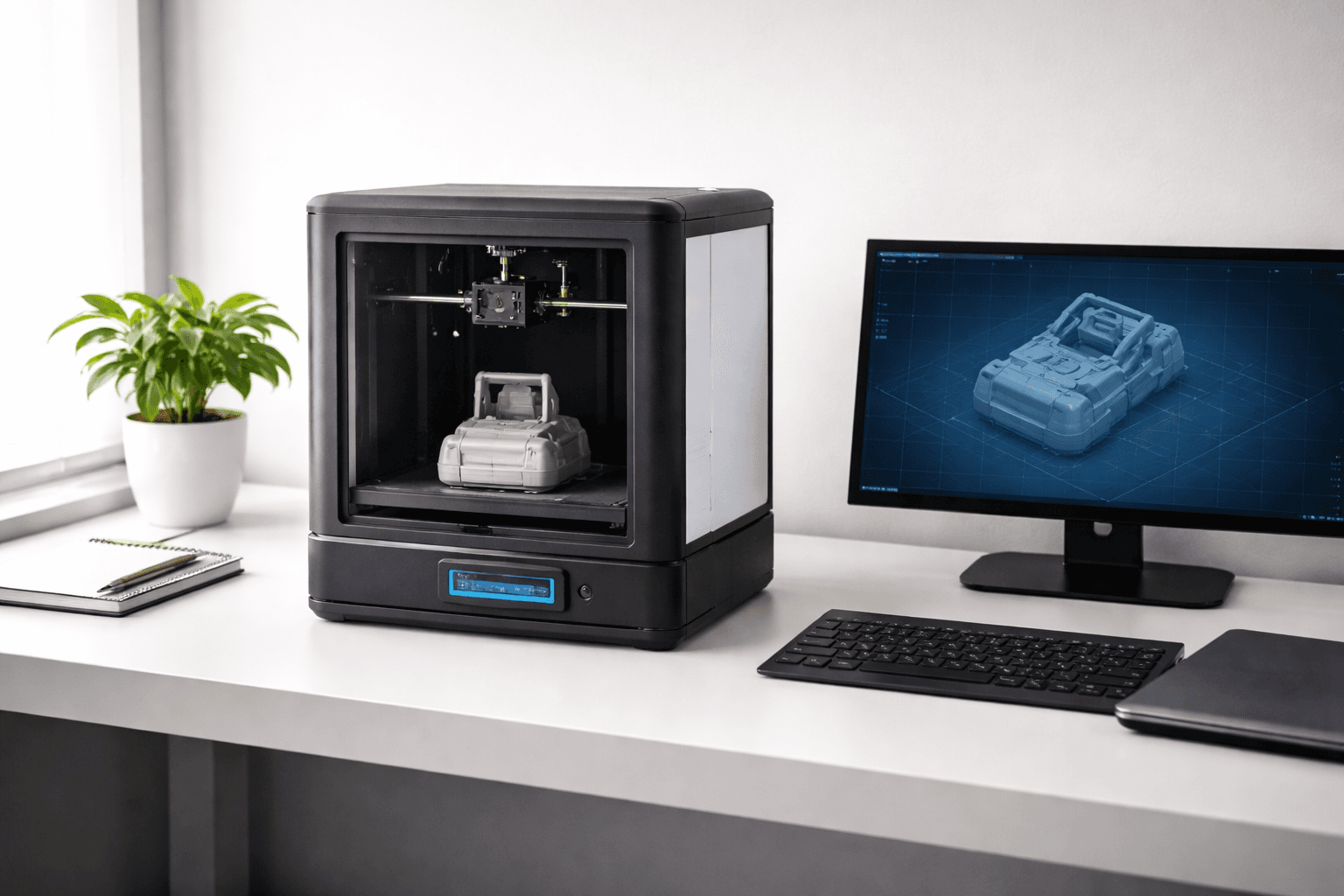
The Adventurer 5M Pro's core value proposition is enclosure plus HEPA filtration at under $400. The enclosure keeps users, especially children, away from the hot nozzle and heated bed during printing. The HEPA filter captures ultrafine particles and some VOCs generated during printing, while not a complete solution to filament fumes, it meaningfully reduces airborne exposure compared to open-frame printing. For schools, offices, shared spaces, and families with young children, these features move from nice-to-have to essential. The toolless nozzle swap is a genuinely practical innovation: you twist and pull to remove the nozzle, insert a new one, and lock it in place, no wrenches, no burns, no threading cold metal. Switching between a 0.4mm detail nozzle and a 0.6mm draft nozzle takes under 30 seconds. At 600mm/s rated speed, the Adventurer 5M Pro is fast for an enclosed printer. Print quality is good, not Bambu-level out of the box, but solid and consistent. The 220x220x220mm build volume is comparable to the A1 Mini. Flashforge's ecosystem is smaller than Bambu's, with fewer community resources and a less polished app, but the fundamental printing experience is smooth and reliable. Proprietary nozzles are a minor long-term cost consideration, you cannot use generic nozzles, so consumable costs are slightly higher over time.
Bambu Lab A1 Mini
Bambu Lab A1 Mini ($199), Score: 9.2/10, $199
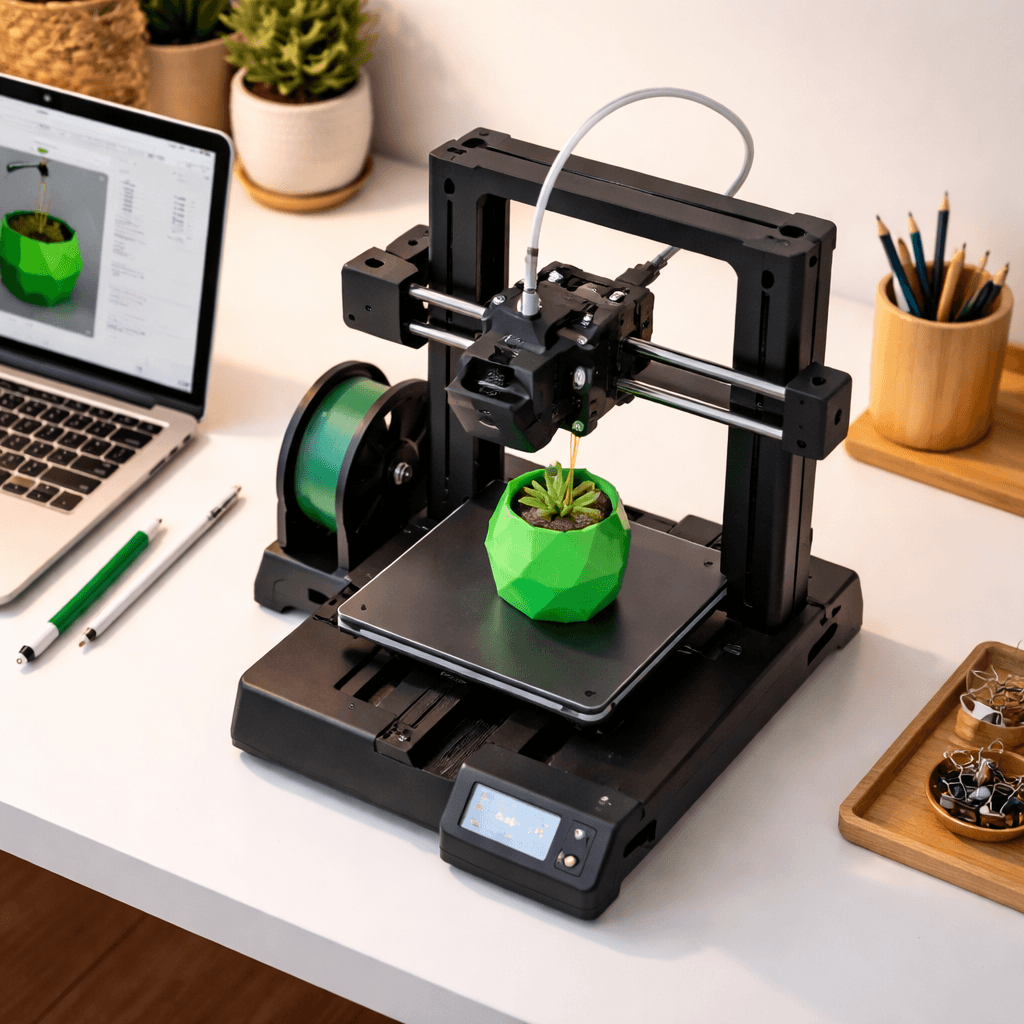
The Bambu Lab A1 Mini makes a compelling case on every dimension except safety. At $199, $180 less than the Adventurer, you get Bambu's full ecosystem: the best slicer in the industry, WiFi printing, camera monitoring, 49-point auto bed leveling, and print quality that regularly embarrasses printers at twice the price. Bambu Studio's one-click profiles for dozens of filament types mean you spend zero time tuning, just pick the filament, hit print, and walk away. The open-frame design means you can watch prints in progress without opening a door, and full-height models don't have clearance concerns. The 180x180x180mm build volume is the only real limitation, the A1 Mini is a compact printer for compact prints. The camera and mobile app let you monitor print progress from anywhere. Print quality on PLA and PETG is genuinely outstanding: clean layer lines, accurate dimensions, and excellent overhang performance at stock settings. The trade-off versus the Adventurer is everything the enclosure provides: no safety barrier, no HEPA filtration, and the hotend and bed are accessible during printing. For adults in a dedicated printing space, none of this matters. For family environments with unsupervised children, shared office spaces with air quality concerns, or formal educational settings with safety requirements, the A1 Mini's open frame is a genuine consideration.
The Bottom Line
Buy the Flashforge Adventurer 5M Pro if safety and air quality are non-negotiable, enclosure and HEPA filtration are worth the $180 premium for classrooms, family spaces, and shared offices. Buy the Bambu Lab A1 Mini if you have a dedicated printing space and prioritize print quality, software ecosystem, and value, it's the better printer on pure performance metrics, and at $199 it's hard to argue with.
Related Articles
Creality Ender 3 V3 vs Bambu Lab A1 Mini: Budget Showdown
The classic budget battle. Creality's speed demon vs Bambu's tiny powerhouse.
Which Bambu Lab A1 Should You Buy?
Bambu Lab A1 Combo vs A1 Mini: same DNA, very different capabilities. We break down who should buy which.
Best 3D Printers for Schools & Classrooms in 2026
Safety, ease of use, and HEPA filtration. The 3D printers that actually work in school environments without becoming a full-time maintenance job.