Best 3D Printer Filaments in 2026: PLA, PETG, ABS & More
The filament you use matters as much as the printer. Here are the best filament brands and types for every material and budget.
Top pick in this guide
Bambu Lab A1 Combo
$399, PrintPick score 9.2/10. Check the live price before it moves.
Bambu Lab A1 Combo
Best PLA Overall: Polymaker PolyLite PLA Pro, Score: 9.2/10, $399
Polymaker PolyLite PLA Pro is the best all-around PLA filament in 2026. It prints consistently across every major printer brand, has excellent layer adhesion, minimal warping, and comes in over 30 colors. The Pro formulation adds impact resistance that standard PLA lacks, making functional parts viable without switching to PETG. Polymaker's quality control is industry-leading. Spool-to-spool consistency means you can dial in a profile once and trust it for months. The vacuum-sealed packaging with desiccant arrives dry every time. At $20-25 per kilogram, it costs slightly more than budget PLA but the reliability pays for itself in avoided failed prints. For beginners: start with Polymaker PolyLite PLA in white or gray. These colors expose layer lines least, print the easiest, and look clean on any model. Add colors once you are comfortable with your printer's settings. Alternative: Bambu Lab PLA Basic ($20/kg) is the other top pick, especially for Bambu printer owners. The RFID integration with AMS systems means zero-configuration printing. Hatchbox PLA ($24/kg on Amazon) is the reliable Amazon house pick with Prime shipping.
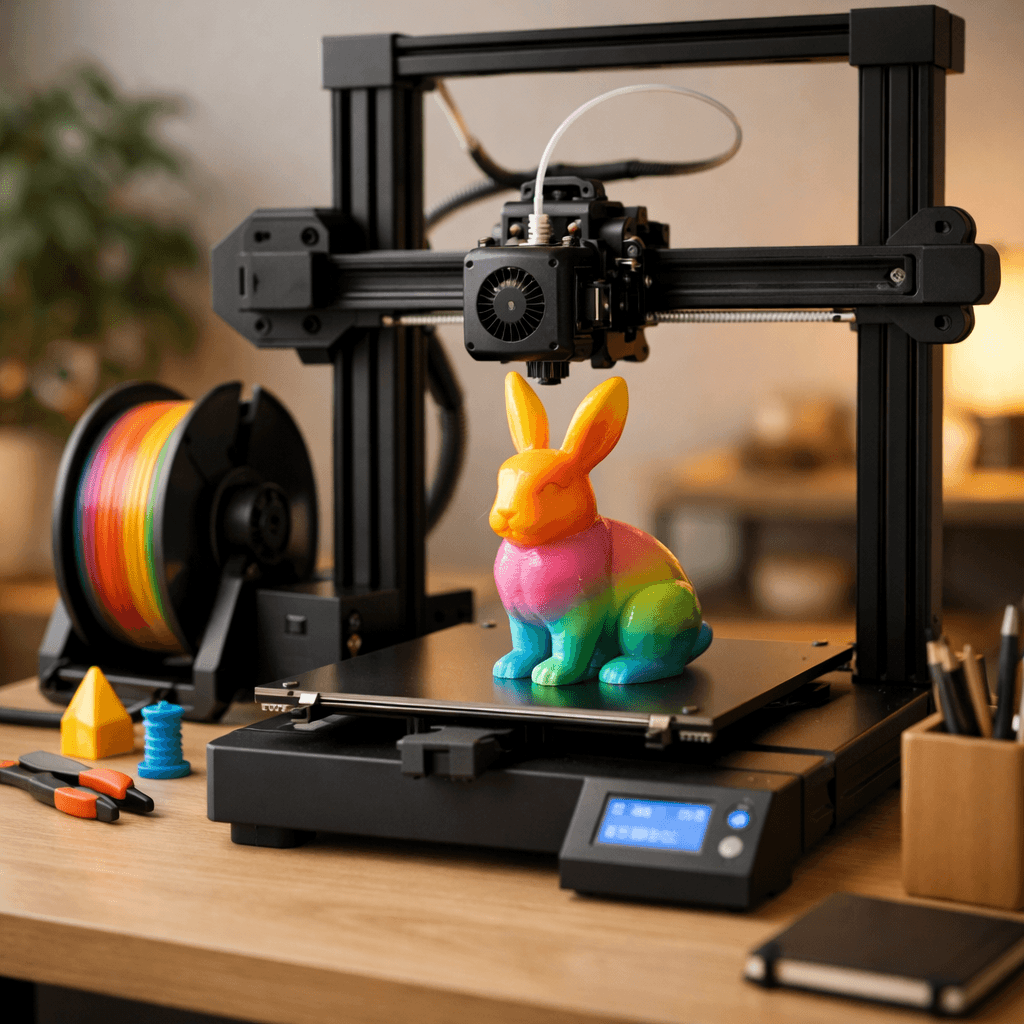
Bambu Lab P2S
Best PETG: Polymaker PolyLite PETG, Score: 9.2/10, $549
PETG is the next step up from PLA: better heat resistance (80C vs 60C), stronger layer bonds, and slight flexibility that prevents brittle snapping. It is the default recommendation for functional parts that see any heat or stress. Polymaker PolyLite PETG ($22/kg) prints as easily as their PLA while delivering genuine engineering improvements. The key to good PETG: dry filament and slightly higher temps. Print at 230-245C with the bed at 70-80C. If your PETG is stringing badly, it is almost certainly a moisture issue. Invest in a filament dryer or use the Bambu AMS 2 Pro's built-in drying. Polymaker, Hatchbox, and eSUN all make good PETG. The differences between premium PETG brands are smaller than PLA. Pick whichever is cheapest and available. For enclosed printers like the P2S, P1S, or Core One, PETG prints beautifully with zero draft issues. Open-frame printers may need a simple enclosure (even a cardboard box) for best results in cooler environments.

Bambu Lab P1S
Best ABS/ASA: Polymaker PolyLite ASA, Score: 9/10, $449
ABS and ASA are the workhorses of functional 3D printing: UV-resistant, heat-resistant to 100C+, and strong enough for automotive and outdoor applications. ASA is essentially ABS without the warping headaches and with better UV stability. Polymaker PolyLite ASA ($25/kg) is our top pick. It prints at 240-260C with a bed at 90-100C. An enclosed printer is mandatory for ASA. The P1S, P2S, Core One, or any QIDI enclosed printer will handle it. Open-frame printers will warp. eSUN ABS+ ($18/kg) is the budget alternative. The '+' formulation reduces warping compared to standard ABS. If you are on an enclosed Ender 3 with a DIY enclosure, eSUN ABS+ is forgiving enough to work. For UV-exposed outdoor prints (garden decorations, exterior fixtures, car parts), ASA is the clear choice over PLA or PETG. A birdhouse printed in PLA will deform in summer sun. The same birdhouse in ASA will last years.
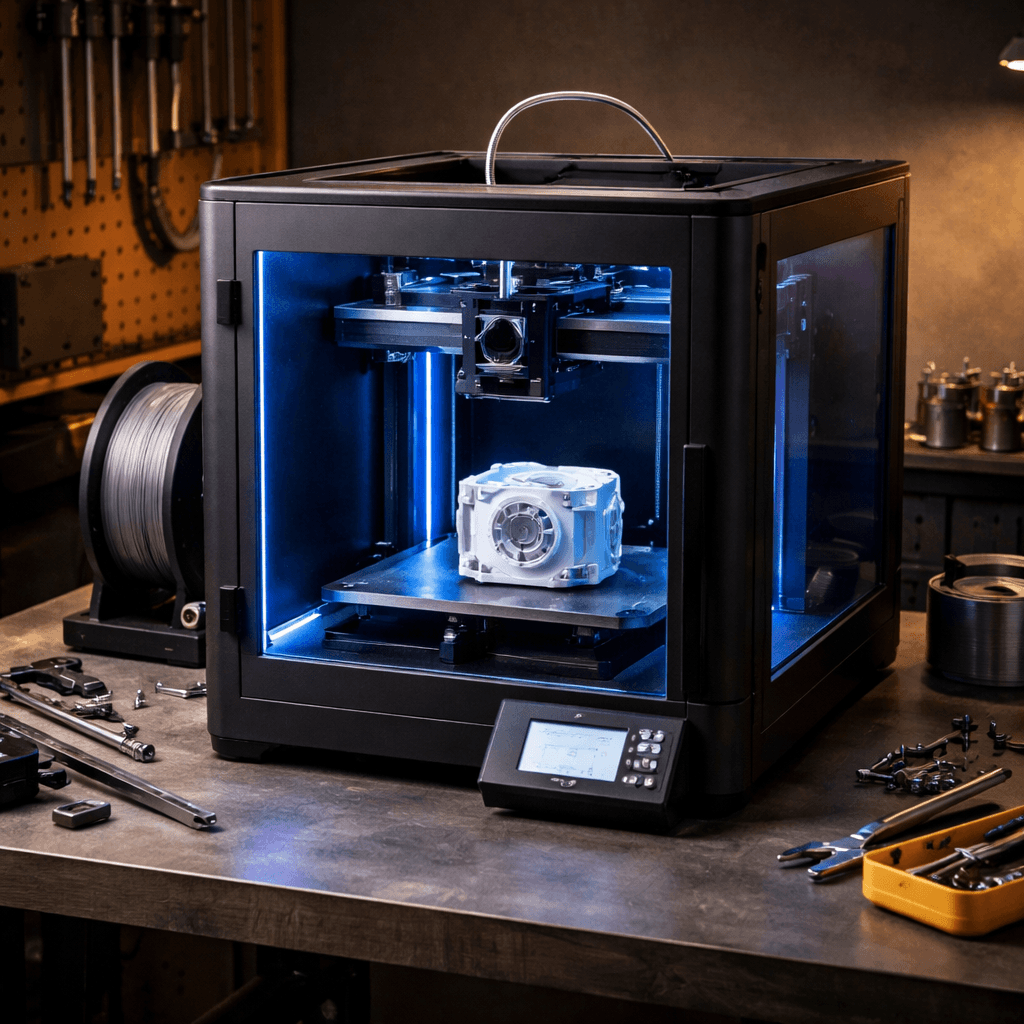
Bambu Lab H2D
Best Engineering Filaments: Nylon, PC, and Carbon Fiber, Score: 8.2/10, $1899
Engineering filaments require an enclosed printer with active chamber heating: Bambu H2D, X2D, Prusa Core One, QIDI Q1 Pro, or QIDI Q2. These filaments print at 260-300C+ with chambers at 50-65C. They are not beginner-friendly but produce parts with mechanical properties approaching injection molding. Polymaker PA6-CF (Nylon 6 with carbon fiber, $45/kg) is the best carbon-fiber filament available. It produces parts with exceptional stiffness and heat resistance up to 180C. Use it for drone frames, automotive jigs, and industrial prototypes. Prusament PC Blend ($38/kg from Prusa) is the best polycarbonate for desktop printing. Transparent, impact-resistant, and heat-resistant to 110C. Prusa designed it specifically for their printers, and the profiles are dialed in perfectly. All engineering filaments are hygroscopic. They absorb moisture from the air and print terribly when wet. A filament dryer is not optional, it is required. The Bambu AMS 2 Pro's built-in drying is the most convenient solution. Standalone dryers from Sunlu or eSUN cost $40-60 and work well.

Elegoo Mars 5 Ultra
Best Resin: Elegoo Standard and Siraya Tech, Score: 8.2/10, $284
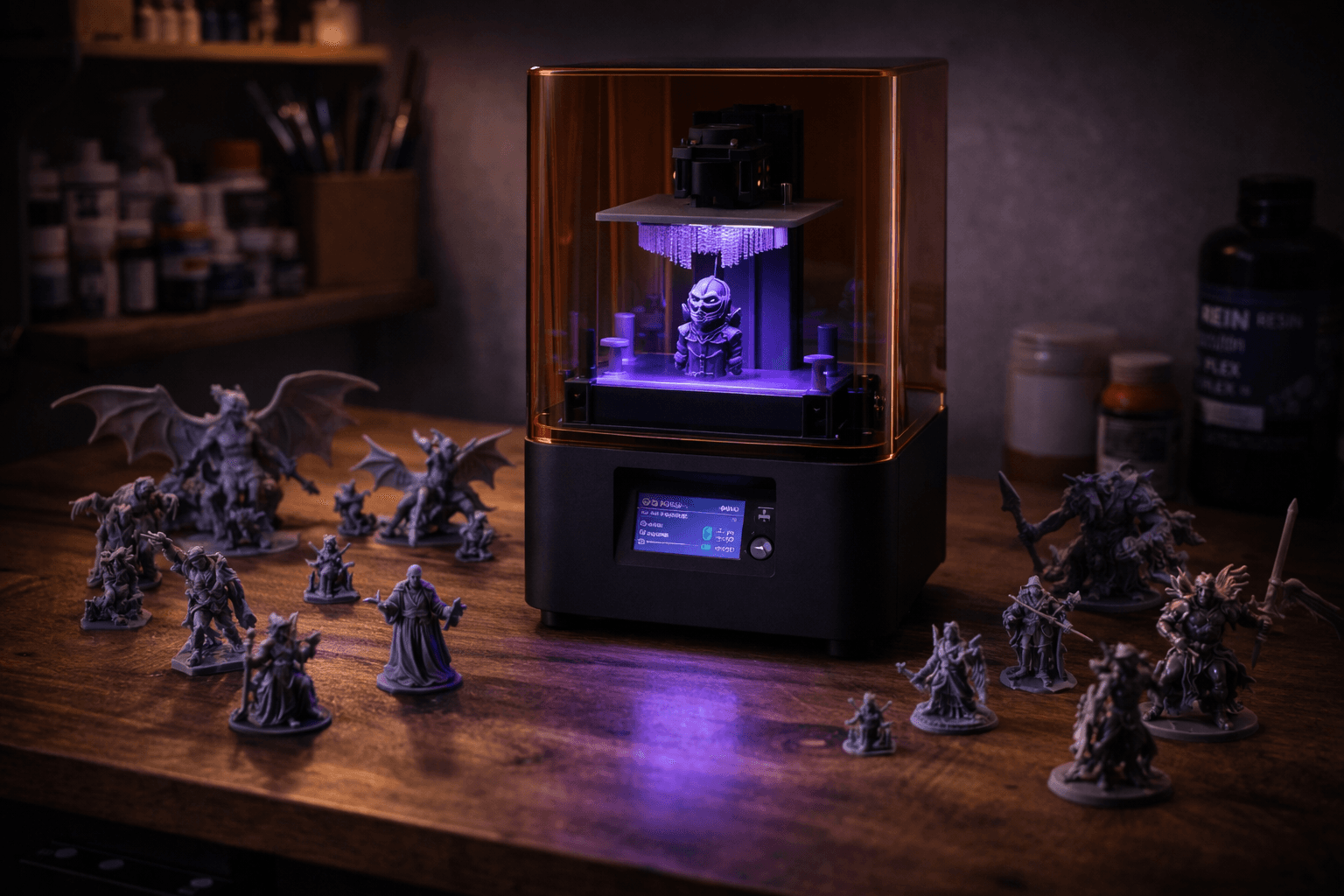
Resin printing uses liquid photopolymer instead of filament spools. The material cost is higher per unit but the detail is unmatched for miniatures, jewelry, and dental models. Elegoo Standard Resin ($25-30/kg) is the default starting point. Available in dozens of colors, it cures reliably on Elegoo, Anycubic, and Phrozen printers. The results are smooth, detailed, and consistent. Start with gray: it shows detail best under any lighting. For miniatures and tabletop gaming, Siraya Tech Tenacious ($40/kg) blended 50/50 with standard resin produces parts that survive drops and rough handling. Pure standard resin is brittle. The Tenacious blend adds just enough flexibility to prevent shattering when a miniature falls off the table during game night. Safety note: resin is toxic before curing. Always wear nitrile gloves, work in a ventilated area, and never pour uncured resin down the drain. A wash and cure station ($100-150) is essential. The Elegoo Mercury X or Anycubic Wash & Cure Plus handle both washing and UV curing in one unit.
The Bottom Line
The filament you choose matters more than most beginners realize. Start with Polymaker PolyLite PLA Pro or Bambu Lab PLA Basic. Both are reliable, consistent, and available in enough colors for any project. As you grow, add PETG for functional parts, ASA for outdoor applications, and engineering filaments once you have an enclosed printer with active chamber heating. Budget tip: Amazon frequently runs 2-for-1 deals on Hatchbox and eSUN filament. Stock up during sales. Filament stores well for years if kept sealed with desiccant. A single 1kg spool costs $18-25 and prints dozens of small projects. The ongoing cost of 3D printing is lower than most people expect.
Our Pick
Polymaker PolyLite is our #1 filament pick across PLA, PETG, and ASA. Polymaker's Summer Restock is live: use our code for 35% off storewide through July 5.
Code: SHADMANRAHMAN(Summer Restock: 35% off storewide, ends July 5)
Related Articles
Best 3D Printers for Small Business in 2026
Starting a 3D printing business? Reliability and uptime matter more than peak specs. These are the printers production environments actually run.
Best Enclosed 3D Printer 2026: 5 Picks from $379 to $549, One Clear Winner
ABS, ASA, and nylon need an enclosure. Our picks from $379 (Flashforge Adventurer 5M Pro) to $549 (Bambu P1S), with a clear verdict for apartment use, engineering filaments, and budget buyers.
Best 3D Printers for TPU & Flexible Filament
Printing flexible filaments like TPU requires a direct drive extruder. These printers handle flex without jamming.