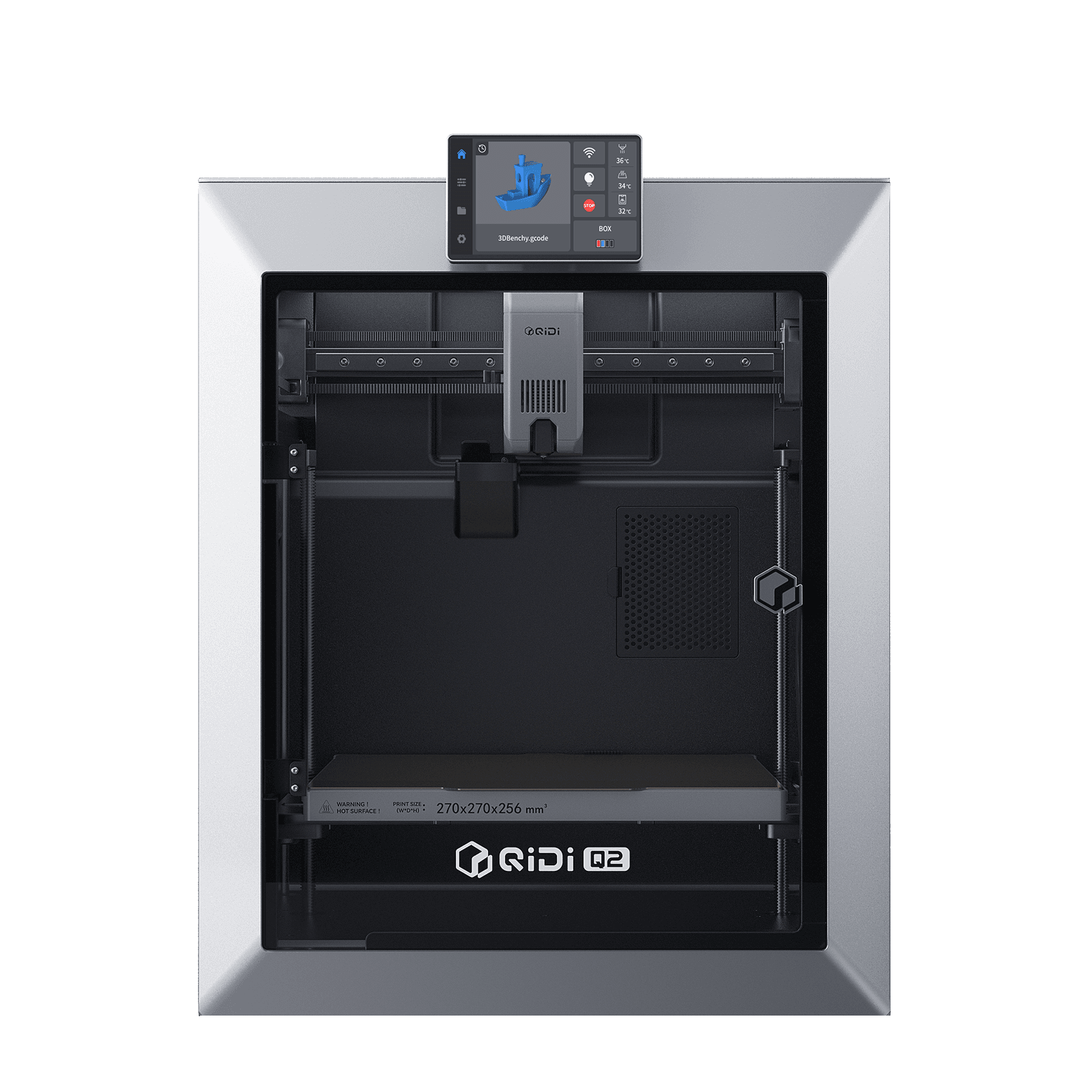
Qidi Q2
Qidi Q2 ($649)
- Price
- $649
- Score
- 8.6/10
- Build
- 12.7 L
Buy on Amazon, $649
US price in USD, approximate. Your price at checkout can differ by store and country.
comparison · updated . Specs and US prices from the PrintPick catalog, checked 2026-09-29. Scores are PrintPick ratings out of 10.
By Shadman Rahman · Prices checked
Qidi Q2 ($649)
US price in USD, approximate. Your price at checkout can differ by store and country.
Buy the Qidi Q2. 8.6/10 at $649.
Buy the Qidi Q2 if active chamber heating for Nylon, Polycarbonate, and carbon-fiber composites is your primary requirement, the $100 over the P2S ($649 − $549) buys a 65C heated chamber. Buy the Bambu Lab P2S if software polish, community support, multi-color capability, and a frictionless experience matter more than the last 20 degrees of chamber temperature. Engineers pushing material limits should choose Qidi; everyone else should choose Bambu. Both are excellent printers, the right choice depends on what you print, not which brand you prefer.
Same scale within each chart. Teal is the best of the 2.
The Qidi Q2 and Bambu Lab P2S are the two most compelling enclosed CoreXY printers under $650 in 2026. Both handle engineering materials. Both are fast. Both are enclosed. But they take fundamentally different approaches: the Q2 leads with a 65C actively heated chamber that enables reliable Nylon and Polycarbonate printing, while the P2S leads with software polish, quick-swap nozzles, and a more mature ecosystem. This is one of the most interesting value debates in consumer 3D printing right now.
The Q2 is Qidi's refined enclosed CoreXY, and its headline feature is the 65C actively heated chamber, significantly hotter than the P2S's passive enclosure. This matters enormously for engineering materials: ABS warps less, Nylon layer adhesion improves dramatically, and Polycarbonate becomes genuinely printable instead of frustrating. The 350C tri-metal hotend handles every filament on the market. At $649, you're getting active chamber heating at a price point that previously required spending $800+. The Q2 also includes WiFi 6, a 1080p camera, and a quick-swap nozzle system that rivals Bambu's convenience. The trade-offs: Qidi's slicer and firmware are functional but less polished than Bambu Studio. The community is smaller, meaning fewer pre-tuned filament profiles and less troubleshooting help on forums. The build volume (230x230x240mm) is slightly smaller than the P2S's 256mm cube. For users who print engineering materials regularly, ABS, ASA, Nylon, PC, and carbon-fiber composites, the Q2's heated chamber is the feature that matters most, and no other printer at this price offers it.
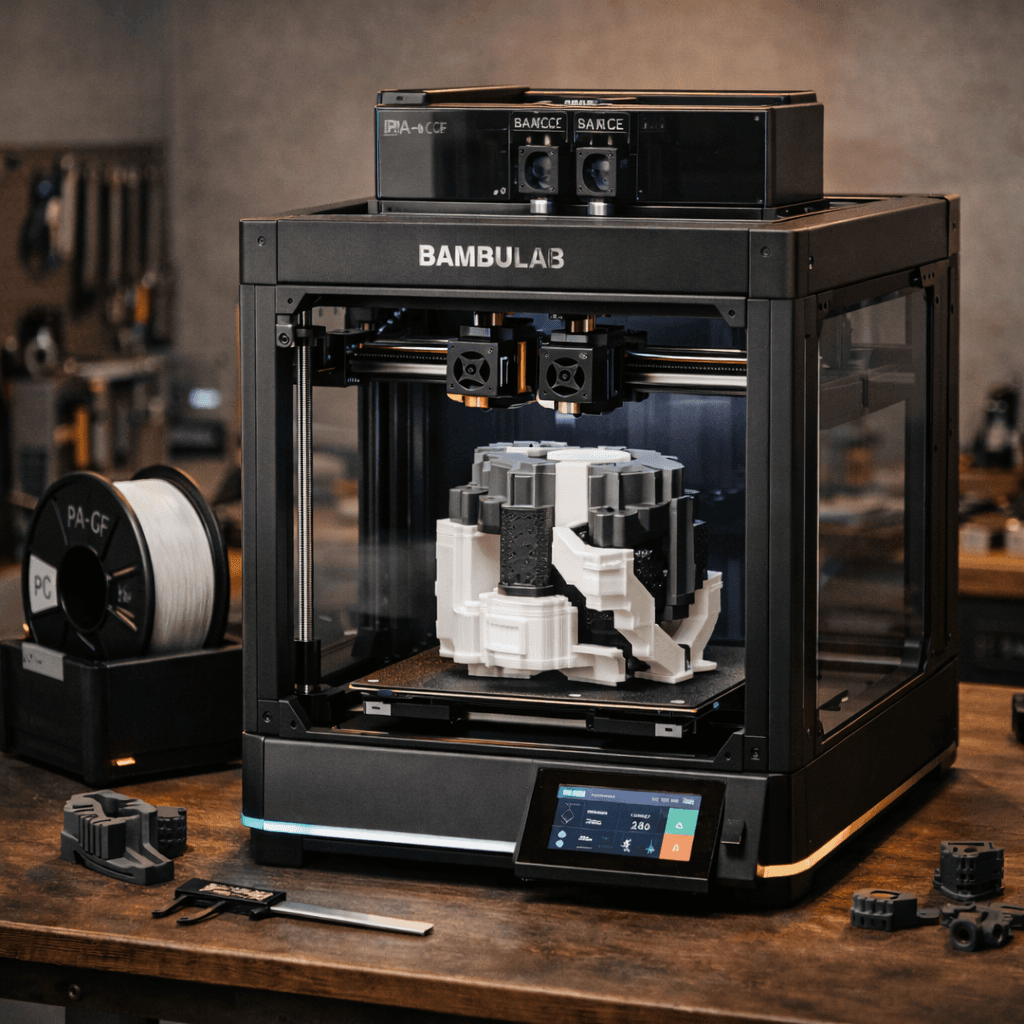
The P2S is Bambu Lab's successor to the beloved P1S and the default enclosed printer recommendation for most users. The quick-swap nozzle system lets you change between 0.2mm and 0.8mm nozzles in seconds without tools. The 1080p AI camera catches failures before they waste filament. The 5-inch touchscreen makes the printer usable without the app. AMS 2 Pro compatibility adds multi-color printing with built-in filament drying. Bambu Studio is the most polished slicer in consumer 3D printing, with pre-tuned profiles for dozens of filaments that work out of the box. The ecosystem advantage is real: the community is massive, support resources are deep, and aftermarket accessories are abundant. The P2S's enclosure uses adaptive cooling that pulls outside air for PLA or recirculates for ABS. It handles ABS and ASA reliably with passive chamber temperatures reaching 40-45C. The limitation vs the Q2: without active chamber heating, demanding materials like Nylon and Polycarbonate are less reliable. The P2S is better for users who primarily print PLA, PETG, and ABS with occasional engineering materials.