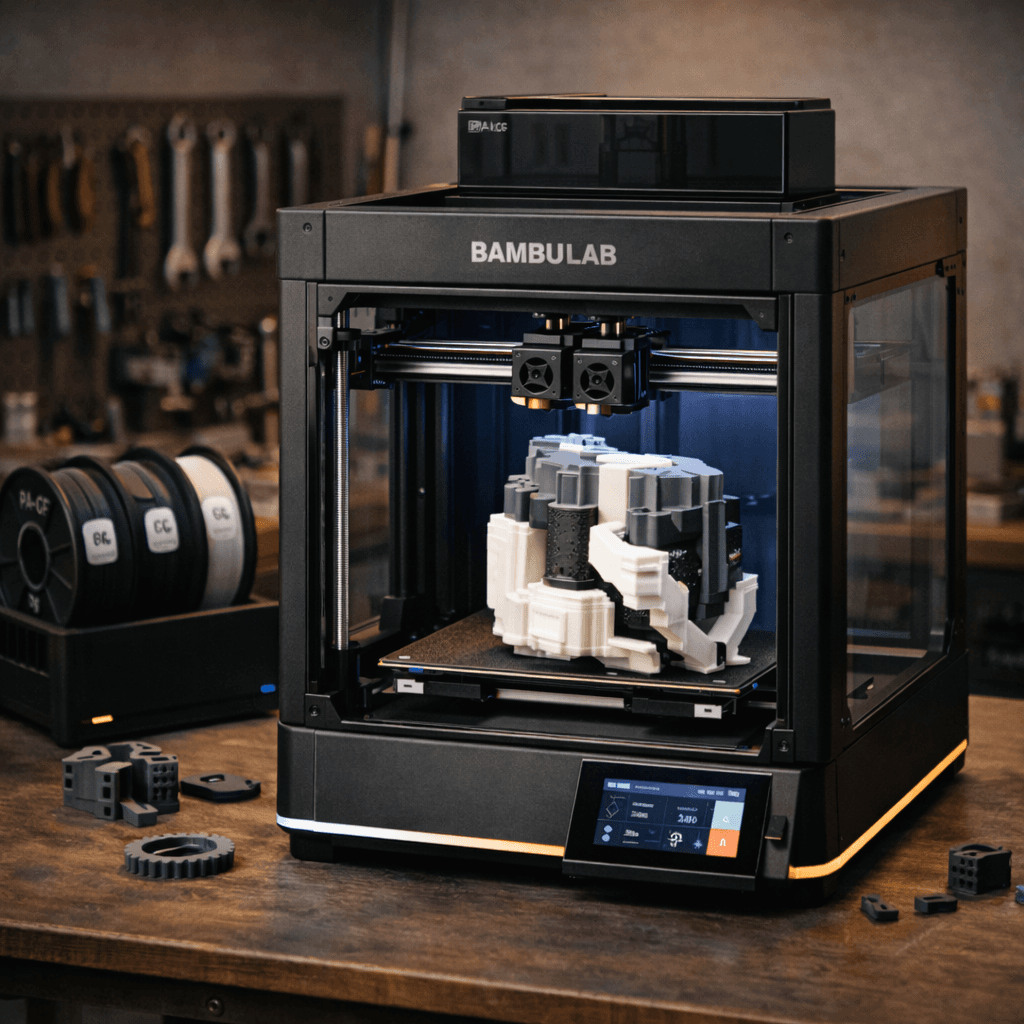
Bambu Lab H2D
- Price
- $1,899
- Score
- 8.2/10
- Wins
- 3/5
Specs and US prices from the PrintPick catalog, checked 2026-09-29. Scores are PrintPick ratings out of 10.
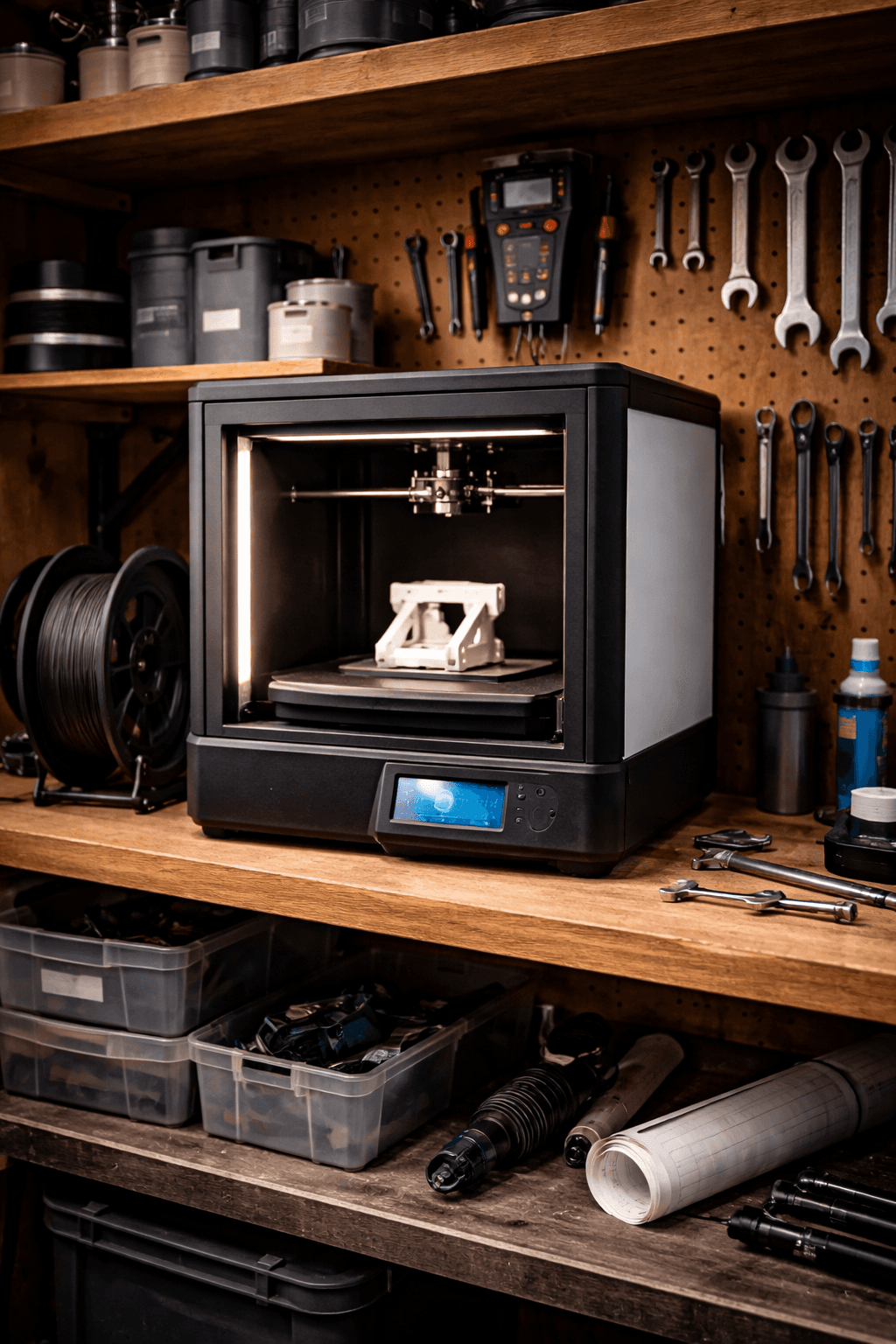
Buy the X-Plus 3.
8.4/10 vs H2D's 8.2/10, and it wins 2 of 5 categories. This is the printer for ABS and Nylon at a price that doesn't hurt. The chamber heating is the feature: everything else at this price is warping-mitigation theater. If you're printing PLA only, look elsewhere. If ABS is part of your workflow, look here first.
Teal wins the row.
| H2D | Spec | X-Plus 3 |
|---|---|---|
| $1,899 | Price | $499 (wins) |
| 33.8 L (wins) | Build volume | 21.2 L |
| 600 mm/s | Top speed | 600 mm/s |
| 0.08 mm | Finest layer | 0.05 mm (wins) |
| 31 kg | Weight | 17 kg |
| H2D | Feature | X-Plus 3 |
|---|---|---|
| Yes | Dual hardened steel nozzles | No |
| Yes | 65C actively heated chamber | No |
| Yes | 350C hotend temperature | No |
| Yes | 50um vision encoder accuracy | No |
| Yes | Optional 10W/40W laser module | No |
| Yes | AI nozzle camera failure detection | No |
| No | Enclosed | Yes |
| No | CoreXY | Yes |
| No | Chamber heating (60C) | Yes |
| No | Auto bed leveling | Yes |
| No | WiFi | Yes |
| No | Camera | Yes |
$1,899 ÷ 33.8 L and $499 ÷ 21.2 L. Lower is more printer for the money.
| H2D | Spec | X-Plus 3 |
|---|---|---|
| $56.18 | $ per liter | $23.57 (wins) |
| $3.17 | $ per mm/s | $0.83 (wins) |
| H2D | Spec | X-Plus 3 |
|---|---|---|
| 7 | Value | 9 (wins) |
| 5 | Beginner Friendliness | 7 (wins) |
| 10 (wins) | Print Quality | 9 |
| 10 (wins) | Speed | 9 |
| 9 (wins) | Reliability | 8 |
| 8.2 | Overall | 8.4 (wins) |
Beyond impressed. Wicked fast, quiet, and the build quality is crazy impressive after 3000+ hours on other Bambu printers.H2D owner, Bambu Lab Community Forum
For elite crafters. The H2D redefines what a desktop printer can do.H2D owner, Tom's Hardware
The dual-nozzle system cuts print times by a factor of two. The speed increase is amazing.H2D owner, r/BambuLab
Active chamber heating to 60C at this price? QIDI is quietly winning the enclosed printer game.X-Plus 3 owner, r/3Dprinting
The X-Plus 3 handles Nylon and PC better than printers costing twice as much.X-Plus 3 owner, Edge of Tech (YouTube)
A printer does nothing without these. Grab them in the same order.
By the numbers, the QIDI X-Plus 3 scores higher (8.4/10). But "better" depends on your use case, the Bambu Lab H2D may be the smarter buy if you need professional.
The QIDI X-Plus 3 is more beginner-friendly (7/10 vs 5/10) with easier setup and a gentler learning curve.
The QIDI X-Plus 3 actually scores higher (8.4/10) despite costing $1400 less. The Bambu Lab H2D only makes sense if you specifically need professional.
Build volume (325x320x325mm vs 280x280x270mm) and print speed (600 vs 600 mm/s). The Bambu Lab H2D is best for professional; the QIDI X-Plus 3 targets engineering.